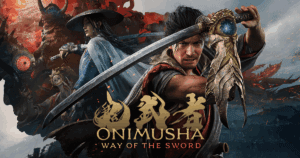
There’s a very specific type of gaming nostalgia reserved for franchises that disappeared before their time: series that were genuinely beloved, commercially successful, and then simply stopped. Not because of failure. Not because the public has left. They just… stopped. Onimusha is the definitive example of this phenomenon, and on September 4, 2026, after twenty years of silence, it finally returned.
This is not a remaster. This is not a collection. Onimusha: Way of the Sword is a new entry in the series, developed by Capcom in the RE Engine, featuring an entirely new protagonist and an entirely new story set in Edo period Kyoto twisted by demonic malice. For a certain generation of gamers, those who grew up with a PS2 and remember exactly what it felt like to absorb Genma’s souls through a glowing glove, this is a genuinely meaningful moment.
What made the originals special?
To understand why path of the sword matters, we have to go back to 2001, when Onimusha: warlords arrived on PlayStation 2 and quickly became the first game on that platform to sell over a million copies, earning a Guinness World Record in the process. That’s not a footnote. That is a cultural moment that defines the franchise.
The original game had a deceptively simple premise: samurai warrior Samanosuke Akechi is given a mystical Oni Gauntlet that allows him to absorb the souls of defeated demons, empowering his weapons and abilities in the process. The setting was feudal Japan during the Sengoku period, with a deliciously pulpy twist: the warlord Nobunaga, already famous in Japanese history as an almost mythological figure of ruthless ambition, had been resurrected by demons and was using them to conquer Japan. The combination of historical foundation and supernatural spectacle was perfect.
The series was also technically impressive for its time in ways that are easy to forget. Capcom used face mapping and motion capture to base the characters on real actors: Samanosuke was inspired by actor Takeshi Kaneshiro, giving the games an unusual cinematic quality for the time. It was like playing a very violent and stylish samurai movie. Four more main titles followed, including the magnificently strange Onimusha 3: Demon Siegewhich somehow involved time travel and Jean Reno fighting demons in medieval Japan alongside Samanosuke. Then, after Dawn of dreams in 2006, nothing. Twenty years of nothing.
Musashi, the RE Engine and what’s really new
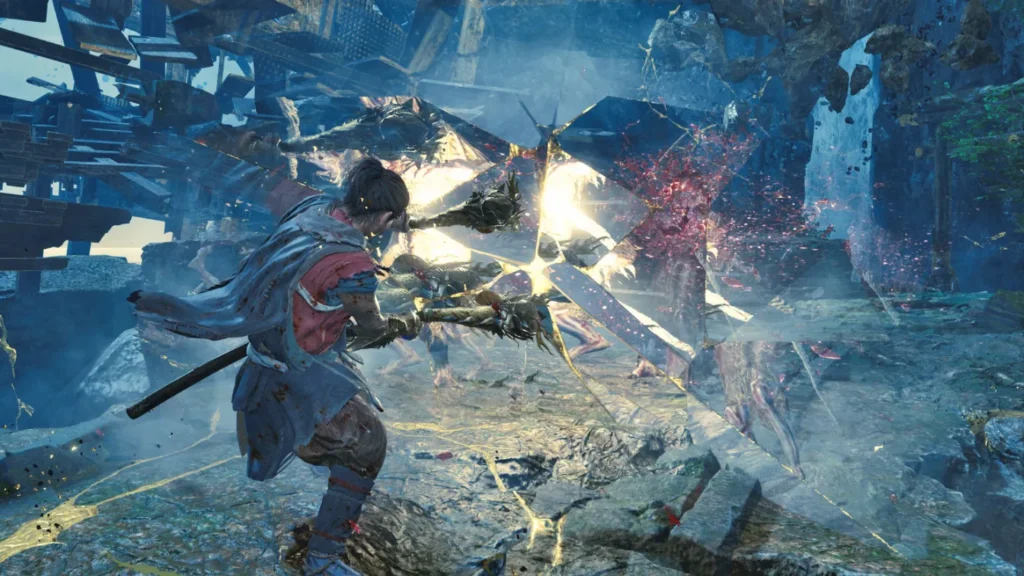
path of the sword It is a new beginning and not a continuation. The new protagonist is Miyamoto Musashi, Capcom’s version of the legendary historical swordsman, whose face is modeled after Japanese cinema icon Toshiro Mifune, maintaining the series’ tradition of basing its characters on real-life screen mythology. Samanosuke fans should know in advance that this is a new story with a new hero; the game explicitly positions itself as a reasonable entry point for newcomers.
The Oni Gauntlet returns, as does the soul-absorbing mechanic that defined combat in the originals. What’s new is the setting: Edo period Kyoto, rendered through RE Engine with the same level of atmospheric detail that the studio provided. Resident of the bad town and The devil may cry 5 – and a combat philosophy that early trailers have described as deliberately focused on swords and parries, rather than the button-heavy action of competing titles. Polygon’s preview called it “a welcome break from Soulslike,” which is both a compliment and a direct statement about where the genre has been building up.
The context of Capcom’s rebirth
It’s impossible to argue path of the sword without acknowledging what Capcom has been doing for the better part of a decade. The study that revived resident Evil with the remake series, relaunched The devil may cry with DMC5, and brought monster hunter aimed at global audiences is now turning its attention to Onimusha. The formula is consistent: take a dormant but beloved IP, build it in the RE Engine, respect the DNA of the original while modernizing the design, and trust that the audience that loved it before will return, in addition to the new players who missed it the first time.
Feedback from the demo leading up to the September 4 release was generally positive about exactly the things the original was celebrated for: smooth swordplay, a strong atmosphere, and the particular satisfaction of the soul absorption cycle. The concerns, when they exist, echo familiar notes from Capcom’s resurgence: questions about the depth and length of the story and whether the game consistently reaches the emotional heights of its best moments.
The real question: Does the gap matter?
Twenty years is a long time in video games. The public that loved Onimusha: warlords on PS2 there are now adults with busy lives who may or may not have kept up with the medium. Players who grew up after 2006 have no first-hand relationship with the series. And today’s action gaming landscape is more crowded and technically demanding than anything Capcom faced in 2001.
That path of the sword What it has to do, beyond the nostalgia it will surely bring to older fans on day one, is timing. The soullike wave has dominated for so long that a polished, accessible action game with a deliberate combat system and strong aesthetic identity has a real room to stand out. Onimusha always focused on style, atmosphere and the specific pleasure of precise swordplay. In a market currently saturated with resistance bars and demanding difficulty curves, that proposal has not aged badly at all.
The significance of the gap ultimately depends on whether path of the sword offers a game good enough to create new fans, not just serve existing ones. The twenty-year wait generated expectation. The game itself has to justify it.
By the time you’re reading this, you’ll be able to find out for yourself. The demons of Edo await.