 Skip to content
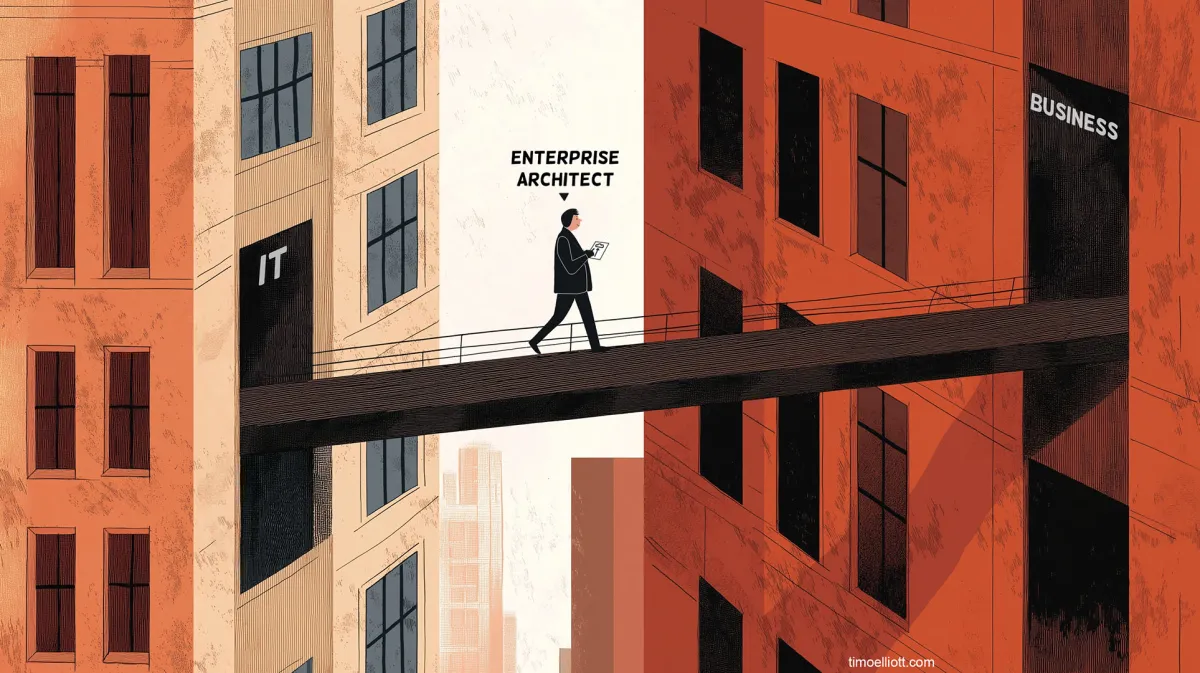
At the recent ASUG TechConnect event there was a great conversation about the evolving role of the enterprise architect in the SAP ecosystem.
Hosted by Jon Reed, Co-Founder of Diginomica, the session featured Geoff Scott, CEO of ASUG and Chief Community Champion, and Josh Greenbaum, Director of Enterprise Applications Consulting.
Together, they explored the challenges, opportunities, and critical skills needed for enterprise architects to bridge the gap between business and technology. I highly recommend you listen to the podcast yourself, but here’s my summary of the points made.
Why are enterprise architects a hot topic?
SAP’s renewed emphasis on enterprise architects stems from a fundamental issue: the persistent disconnect between business and technology.
Many organizations hesitate to migrate to SAP S/4HANA because they cannot build a compelling business case. The role of the enterprise architect is to address this divide, ensuring that technology decisions align with business objectives.
With SAP CEO Christian Klein promising that every RISE project will have an enterprise architect, the pressure to deliver is greater.
However, as there are many SAP customers who have not yet transitioned to S/4HANA, there is a pressing need for more Enterprise Architect professionals to help guide organizations through strategic decision making and digital transformation.
Complex choices ahead: grow, grow, or hybrid?
Organizations face important decisions regarding their future architecture. Should they adopt SAP RISE, opt for SAP GROW, or maintain an on-premises infrastructure while leveraging cloud capabilities? The challenge is to find a balance between maintaining operational control and adopting innovations such as AI-driven processes.
SAP advocates a cloud-driven model where they manage core business processes, allowing companies to focus on innovation. However, many customers remain cautious and prefer hybrid models that retain some local control while benefiting from the efficiency of the cloud.
To help make the right decisions, organizations need enterprise architects with the right vision and skills.
The real challenge: it’s not about tools
Some “Enterprise Architect” job postings still require detailed coding skills, which fundamentally misses the point of the position.
And discussions about enterprise architecture often lead to technological solutions. For example, Signavio, LeanIX, WalkMe and Cloud ALM are clearly very important to SAP’s architecture strategy going forward.
But the problem is not so much a lack of tools as a lack of clarity about the skills and role of the enterprise architect. Instead of focusing on tools, organizations should define what they expect enterprise architects to achieve and ensure they have the right competencies.
Some CIOs maintain dedicated enterprise architects, while others distribute the role among multiple staff members. Without clear job specifications and success metrics, enterprise architects risk being underutilized or misaligned with business needs.
Why enterprise architects are essential
Josh Greenbaum points out that one of the core problems with enterprise software is the historical siled approach to development and sales. Vendors build and sell products in silos, leading customers to purchase and deploy them in silos.
The result? Fragmented systems make cross-functional digital transformation incredibly challenging.
Enterprise architects are among the few professionals who can think across silos, bringing together business units to drive cohesive strategies. However, this role is not yet widely embedded in organizations, often leaving companies with disjointed technology landscapes that hinder progress.
Manage stakeholders, not just technology
In an era where entrepreneurs can whip out a credit card and purchase a service online (sometimes proudly ignoring core IT), enterprise architects have no governing authority over technology choices, but must navigate a landscape in which they have to fix what they’re given. Architects should focus on consensus buildingfostering collaboration between IT and business leaders to ensure alignment.
Instead of focusing on coding or infrastructure, today’s enterprise architect must be a expert communicator and relationship builder. This means advocating for governance without being perceived as an obstacle, giving business leaders the insights they need to make informed technology decisions.
The art of tough love in enterprise architecture
The biggest challenge for enterprise architects is ensuring trust. Business leaders often make technology decisions independently, leaving IT to integrate solutions after the fact. Architects must establish relationships early, engaging with business leaders before making technology decisions.
The key to success, says the panel? Tough love. Architects must step back when necessary, ensuring business decisions align with enterprise-wide strategies. This means challenging IT-overlooking vendors, advocating for holistic integration, and demonstrating the long-term value of architectural foresight.
AI raises the stakes for enterprise architects
While AI fatigue is real, AI also underscores the importance of enterprise architecture. Without a unified enterprise data model, AI initiatives will struggle to deliver accurate insights. Fragmented data sources lead to incomplete or misleading AI results, undermining the value of automation and analytics.
Contrary to some predictions, AI will not eliminate the need for enterprise architects. Instead, it increases its importance by forcing organizations to address long-standing data and integration challenges.
Architects must take an active role in shaping AI strategiesensuring that technology investments support, and do not hinder, business objectives.
Bridging the gap between business and IT
One of the biggest barriers to enterprise architecture success is the entrenched distinction between IT and business. Many organizations still view enterprise architects as IT staff rather than strategic business partners. To overcome this, architects must reframe their role, demonstrating how their work directly contributes to business objectives.
Building trust requires more than technical expertise; requires tell stories. Architects must communicate the value of technology decisions in business terms, linking architectural strategy to revenue growth, customer experience, and operational efficiency.
The need for security barriers, not bureaucracy
To ensure an effective enterprise architecture, organizations must focus on practical governance structures. Instead of slow-moving architecture review boards, companies should implement less ominous-sounding “guardrails”: predefined guidelines that help teams make aligned technology decisions without unnecessary bureaucracy. These railings promote agility while maintaining architectural integrity.
Call to Action: Strengthening Enterprise Architecture Skills
Enterprise architects have never been more essential, but success requires continuous learning and adaptation. To thrive in this evolving landscape, enterprise architects need to:
- Develop stakeholder management skills – Build relationships across the organization and position yourself as a strategic partner.
- Master the art of storytelling – Learn to effectively communicate the business value of architectural decisions.
- Expand knowledge of data and artificial intelligence – Understand how AI and data governance impact enterprise architecture.
- Embrace hybrid models – Balance local control with cloud-driven innovation.
- Implement effective security barriers – Promote structured decision-making without excessive bureaucracy.
As digital transformation accelerates, enterprise architects must shift from IT experts to business enablers.
By fostering collaboration, breaking down silos, and driving strategic conversations, they can position themselves as indispensable leaders in shaping the future of enterprise technology.
A conference opportunity!
A good way to do this is to join us at the Next Generation SAP Enterprise Architects Forum at SAP headquarters in Philadelphia, February 24-27. (Early bird discount ends February 7, hurry!)
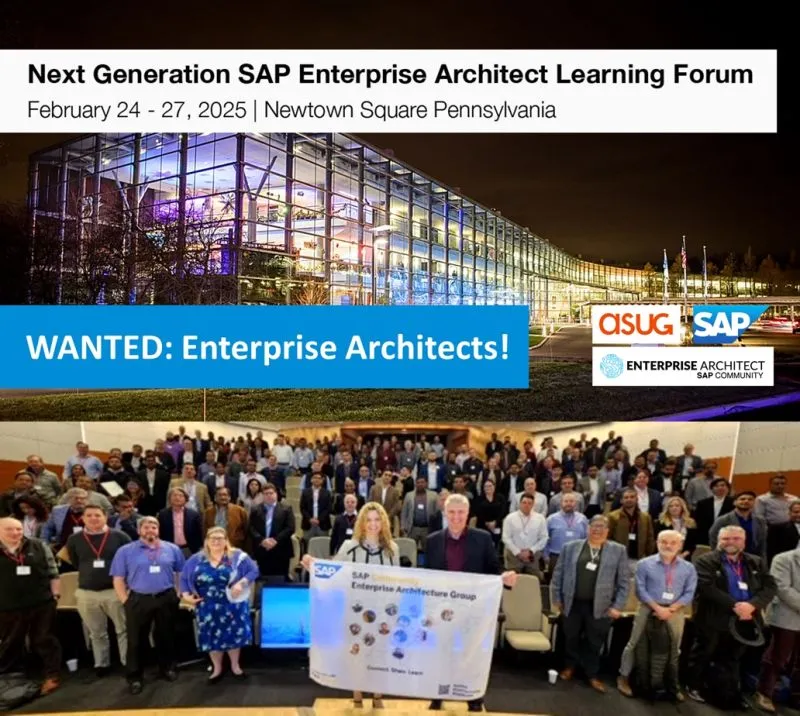
Join legendary SAP community evangelist Paul Kurchina and other illustrious SAP speakers and experts as we discuss how the role of Enterprise Architect is changing in the future, the role of AI, and have fun doing it!
In the meantime, how do you see the role of enterprise architects evolving in your organization? Share your thoughts and experiences in the comments below!