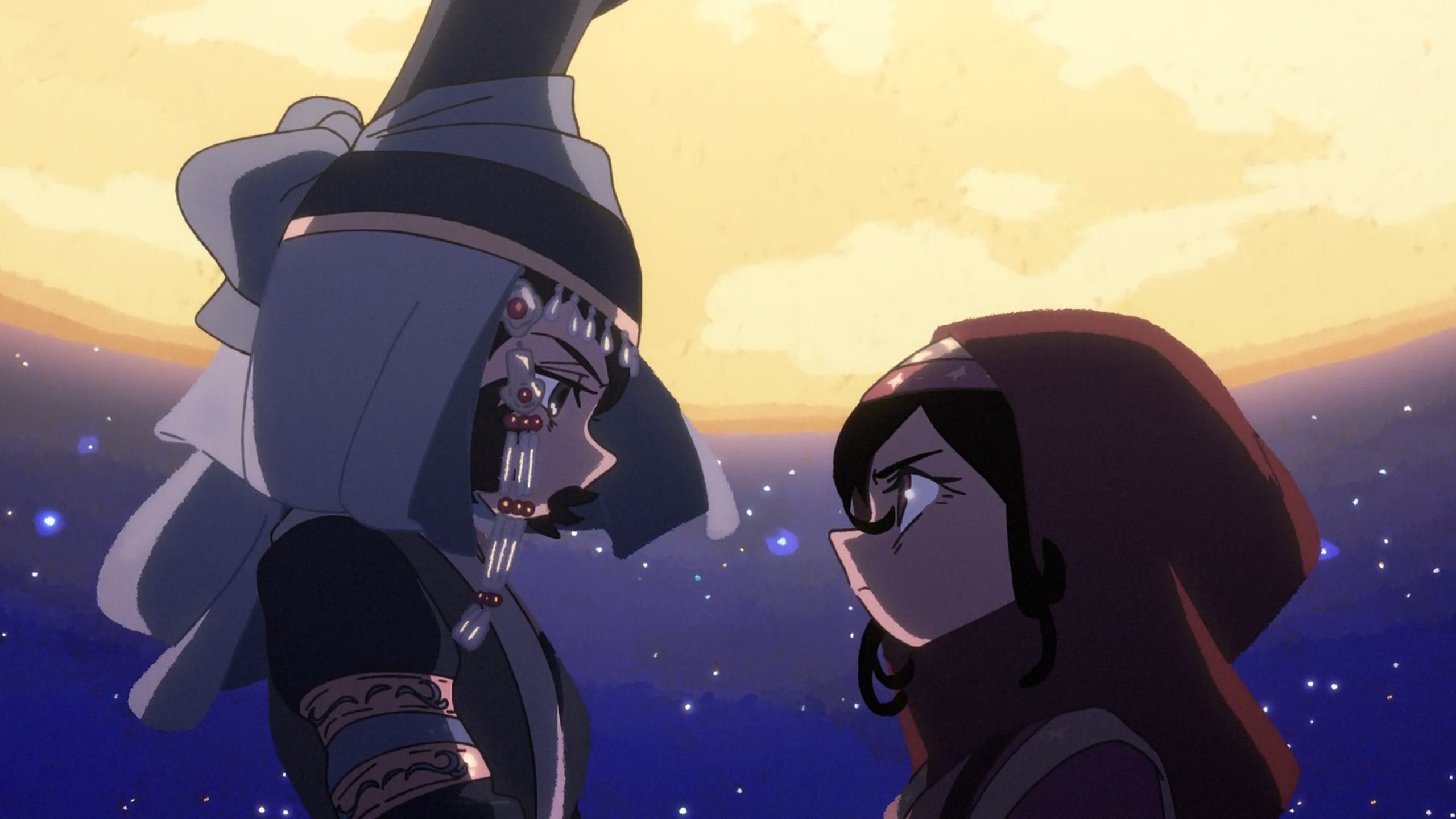
Rather than merely limping to the goal line, allowing its gripping narrative and careful cultural research to carry it, Jaadugar fought back against production exhaustion. To do so, they gathered their most luxurious lineup of lead creators to tackle this final arc, making its ending (for now) as evocative and fulfilling as possible.
Our previous article about Jaadugar: A Witch in Mongolia covered the genesis of its anime adaptation. We recalled how its team came together, shared what their priorities and philosophies regarding historical fiction happen to be, and then analyzed how their mindsets manifested across the first six episodes. That stopping point wasn’t just a convenient halfway landmark, but also a pivotal narrative beat for the series altogether. The staff understood as much, given that it was entrusted to as high-profile a guest as you could imagine. That’s no exaggeration, mind you; while we’re in an era where recognizable names tied to action blockbusters are used as promotional tools, enlisting meticulous theatrical animation maestro Masashi Ando as the sole storyboarder was genuinely shocking. It was in fact the first time anyone—specifically, his friend and equally renowned designer Kenichi Yoshida—had convinced Ando to accept such a request, but his affinity with the material at hand couldn’t have been any clearer.
Apart from bringing us up to speed, it’s worth bringing up the feat they’d just accomplished to better understand how Jaadugar‘s final stretch subverts expectations. After all, what would you reasonably expect after such an ambitious episode that acts as a paradigm shift within the narrative? Most of the time, that would lead into a modest production effort to preserve energy, and even a slower storytelling rhythm to get viewers acclimated to the new chapter in the story.
Most of the time indeed, but not in Jaadugar, which is a beautifully backloaded season of television.
Of course, there is still a sense of prioritization, and taxing episodes like the preceding one are always going to have repercussions; especially in the context of a production that, like we’ll be forced to talk about yet again later, has had its share of scheduling issues. That said, there’s a concerted effort by its team to put extraordinary effort into the final stages of the show, counterbalancing the creeping exhaustion and then some. This season of Jaadugar was always going to be an excerpt of a larger story—one that stands on its own, but only if you’re capable of connecting its two halves without losing too much energy in the process. No matter how good the first episodes are, if the rest of the broadcast had lacked punch, the inconclusive narrative might have left people deflated rather than dying for a sequel. Fortunately for everyone but our patience, we can celebrate the exact opposite outcome.
Following up a prestigious outsider guest like Ando, episode #07 returns to closer associates to Science Saru. Right after reminiscing about Sitara and Töregene’s alliance, forged in the pain inflicted by the same empire, the framing makes it clear that Yujiro Abe storyboarded the first half of the episode. Though not to the same degree as his previous appearance, where the light raining down from above had been a major theme, the usage of overhead shots reminds us of the inherent link between Jaadugar and the heavens… and of course, of Abe’s own propensities. If you add to that other familiar choices like the depiction of tradition and myth through Ryoko Tanaka’s papercuts, his own fingerprints become so obvious that the official confirmation of the storyboarding splits felt superfluous.
When it comes to his delivery, though, it’s two aspects derived from the show’s evolving narrative that stand out the most. One of them may seem like a minor detail, but it’s quite telling about the series directors’ philosophical approach to the adaptation. Although it’s an attitude that has manifested across the entire show, chief director Naoko Yamada addressed it quite plainly in a recent interview with CREA: she’s not particularly interested in historical events, at least not on their own. Although working on Jaadugar has been stimulating, constantly sparking her interest in learning more about various cultures and their history, this is something that has always happened as a consequence of her actual interest. That is, the curiosity about how real people felt, thought, and tasted at the time.
 This humanistic angle, shared to a large degree by series directorSeries Director: (監督, kantoku): The person in charge of the entire production, both as a creative decision-maker and final supervisor. They outrank the rest of the staff and ultimately have the last word. Series with different levels of directors do exist however – Chief Director, Assistant Director, Series Episode Director, all sorts of non-standard roles. The hierarchy in those instances is a case by case scenario. Abel Gongora, easily explains why the Jaadugar anime has thus far been so sparing with aspects like maps. It’s not until they’ve fully sold the personal dimension of this conflict, framed predominantly through Sitara and Töregene’s bond, that we’re starting to see military and political scheming take over both the narrative and visuals. As it starts to lean more in that direction, the show issues a new challenge to its directors: it asks them to turn impersonal concepts like army diagrams into visually engaging sequences. Abe is the first one to give it a spin, with his most amusing attempt being a masked transition between a certain warmonger’s plans and his own theatrics to promote that campaign.
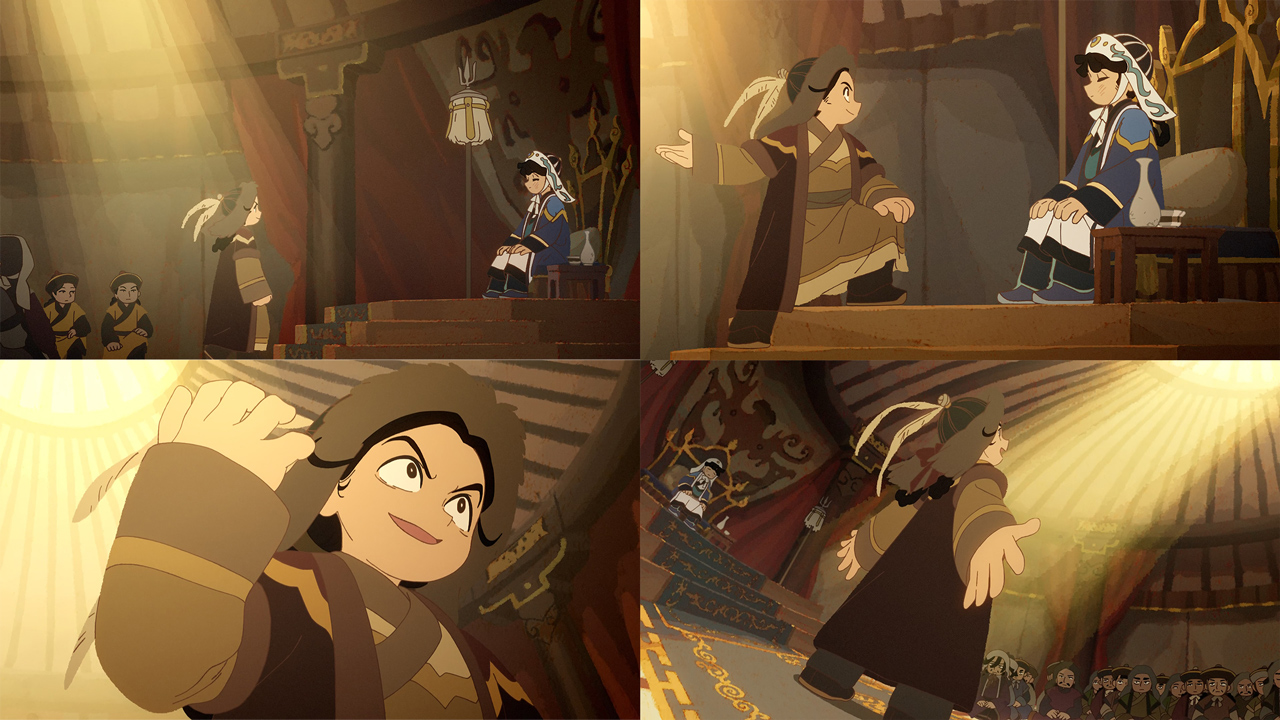
It’s precisely that character who embodies Abe’s sharpest direction. In contrast to the fairly neutral delivery in the manga, his storyboarding demonstrates why Tolui’s natural charisma threatens to destabilize an entire empire. Leaning into an angle that the anime has used before, which is to link that figurative dazzling presence into a literal one, his accidental hijack of the conversation about the Mongol plans constantly puts him in the spotlight.
The following episodes make it clear that, for as ruthless as he is in battle, Tolui is truly committed to his family and the empire altogether. Despite looking like a figure placed on this board to attempt a coup that could earn him the throne once occupied by Genghis Khan, Tomato Soup’s story reads him in an entirely different fashion. However, Jaadugar—and this episode in particular, given an earlier scene between siblings—also understands the importance of optics in politics. Tolui may not intend to betray Ögedei, but for as long as he is an incredibly charismatic figure with access to military might, schemers will read his mere existence as a potential vector of attack. Tweaking the lighting in his favor and framing him in low-angle shots that aggrandize his presence are simple tricks, but they go a long way to convey his powerful presence. If the Great Khans have been linked to stars, Tolui is the Sun itself.
 As the episode progresses, we get a taste of the unraveling political conflicts, as well as their ties to that personal dimension that motivates the series directors. The benign veneer over the otherwise brutal Mongol regime pushed by Ögedei frustrates Sitara, who wishes they were a perfectly evil opponent to fuel her revenge. Two parallel scheming factions begin to develop, and it’s through their moments of intimacy that we’re introduced to them. On the one hand, we see Töregene’s willingness to show vulnerability in front of Sitara, who exposes her true self to her as well. On the other, it’s time to introduce Great Khatun Boraqchin, with a quietly imposing presence that can only be disarmed by the earnestness of fellow Ögedei spouse Möge. The likes of Yamada have praised Tomato Soup for her ability to imagine so much interiority and interpersonal chemistry within the gaps of recorded history, so it’s no surprise the anime adaptation treats these moments with such care.
It’s also worth noting that, after Abe’s solid first half, Nick McKergow made his storyboarding debut in the second one. Although it helps that inherently funny character dynamics come into play, the comedy feels particularly sharp under his pen; not just through the expressions and poses, but also with clinical pauses that exploit Sitara’s amusing cunning. Down to the tiniest details like a parasol lagging behind the person it’s meant to shield, McKergow’s attentiveness as an animator feels like it can translate to this new position.
Speaking of emerging talent, episode #08 features Asami Murakoshi as the storyboarder and episode director. Given that she’s a massive fan of Yamada whose entire life pivoted because of Liz and the Blue Bird (not much of a secret), it’s not a surprise that her most inspired work thus far has been in the chief director’s collaborations with the studio. Despite appearing modest when compared to Jaadugar’s more obvious highlights, Murakoshi turns a transitional beat into one of the most delicate yet sharp episodes in the whole show. The finesse in the execution feels way beyond her still limited degree of experience, but it’s a quietly brilliant outing from the conceptual stages already.
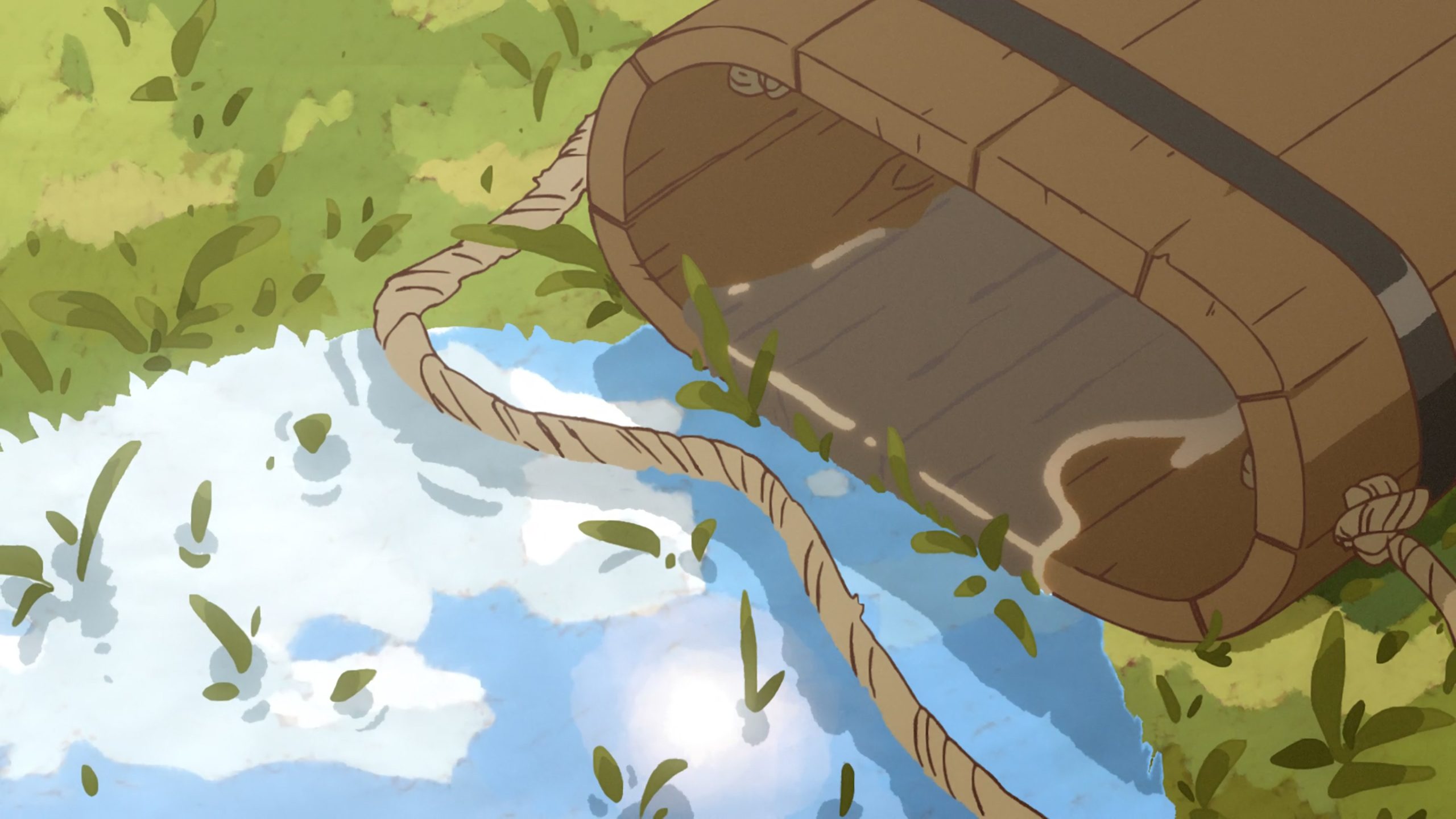
It’s worth pointing out, for example, how Murakoshi’s imagery depicts knowledge as something universal and more tied to nature itself than to any specific civilization. Much to Sitara’s chagrin, Jaadugar has constantly emphasized the value of cultural exchanges, the commonalities between different peoples, and how we can advance by combining their answers to similar challenges. Our protagonist is quite adept at stumbling into problems and then using her lived experiences to navigate through them, which is exactly what occurs as she finds a cure for Boraqchin’s poisoning. Murakoshi’s storyboards don’t just connect her eureka moment with Muhammad’s lesson to Sitara about preparedness, but also stylize the spilled water as a perfect mirror of the stars. All humans exist below the same skies, no matter how far apart we are. It’s this connection through the world itself that will always allow us to repurpose other people’s knowledge.
As mentioned before, the execution of those ideas is just as refined. There is a delightful flow to the palette; Boraqchin’s surroundings are lifeless when she’s locked inside, you can sense Möge’s kindness in the evening colors when she begs for help, Sitara appears in their life as if she were a new light for the Great Khatun, and ultimately, Boraqchin’s world becomes more vivid than ever when she regains her health. You can sense Murakoshi’s passion for Yamada’s work in certain areas, like the conversations with characterful acting rooted in the storyboards themselves, rather than in the flamboyant traits of a specific animator.
In the aforementioned CREA interview, the chief director framed this adaptation as an attempt to fill the gaps in the original work. And the best, most meaningful way to do so in her eyes was through more intricate depictions of the characters’ daily lives, as she has always seen that as the ideal way to communicate someone’s personality and cultural identity. While his angle is a bit different, perhaps more anthropological in a utilitarian way, Gongora shares a similar viewpoint; hence why he greatly values all the practical knowledge about everyday life in Mongolia, which they acquired through careful research and a much-promoted scouting trip.
Following that philosophy, one of the most interesting additions to this episode’s script—and of course, something successfully fleshed out by Murakoshi’s storyboard—is the preparation of urum. The viewer casually experiences Sitara’s process step by step; the people she would meet along the way, how to present the dish, and the way to eat it as well. At the same time, the scene still accomplishes the more tangible narrative intent it had in the manga: showing Töregene’s jealousy as she notices Sitara orbiting around Boraqchin a lot amidst her scheming.
That growing rift between the two becomes an important source of conflict during the final stages of the show. Like many other challenges Sitara ends up facing, this is a result of her hubris. As she grows more confident in her machinations to destabilize the empire, she fails to realize what she’s unleashed upon the Mongolian steppe by healing Boraqchin and encouraging her ambition. All the shrewd political moves that follow appear to up the stakes; we have the developing war against Jin, Ögedei mysteriously falling ill in a way that incriminates Töregene, and a potentially dangerous ceremony to save his life that must involve his siblings. Curiously, many happenings that benefit Boraqchin, who in one fell swoop could save her husband, get pests like Tolui and Töregene off the board, and secure another asset like Sitara firmly in her pocket.
Despite the overarching narrative being so dyed by human machinations, dragged through the mud of personal agendas, episode #09 is conversely defined by the immaterial. The lead creators behind Jaadugar have explained over and over how much weight they put on respectful, accurate cultural representation. Sure, they are open to an occasional white lie that reinforces the evocativeness even if it comes at a slight cost of accuracy, but those are interesting curiosities more than a betrayal of their stance. Their mindset has been palpable from the design stages to the animation work; after all, we just praised a sequence extensively showing how a specific food would have been prepared at the time. Lots of effort went into replicating tools, clothes, architecture and art, and also into approximating their manual processes and behaviors.
And yet, is that physical dimension enough to capture a culture as it was hundreds of years ago? You shouldn’t be surprised to hear that Jaadugar’s staff thought that they shouldn’t stop themselves at that. Yamada noted, for example, that the scenes where we visualize Sitara learning about astronomy shouldn’t feature imagery (a dark void universe, a blue Earth) rooted in modern conceptions. In this way, the team wasn’t just trying to be accurate when it comes to the scientific understanding at the time, but also to keep people’s imagination grounded in their reality.
It’s as an extension of that idea that the adaptation does an exceptional job with the spirituality of Jaadugar. Tomato Soup succeeds in explaining the beliefs of various civilizations, but with the brisk pacing of the manga, the delivery of the customs derived from them can be rather matter-of-fact. In contrast to that, the anime consistently emphasizes these ceremonies, aggrandizes their atmosphere, all while still adding new mythological imagery rooted in historical research. Above all else, it’s committed to making the viewer feel as bystanders would at the time; not only presenting the results that could explain why certain beliefs were held, but also selling the overwhelming, magical, sensorial experiences that turn feelings into faith.
Back in the sixth episode, we highlighted director Kotaro Matsunaga as a particularly apt figure to handle otherworldly matters. He has an affinity for larger-than-life material, and within an environment like Jaadugar, his approach tweaks the rules just enough to make his episodes stand out. In short, Matsunaga is invested in modulating the lighting as a storytelling tool. Although that’s something that this show has consistently attempted—the literalization of Tolui’s brilliance continues across this arc—his emphasis on digital effects and photographic tendencies is unusual for this cel-forward production. While he doesn’t betray the show’s aesthetic to an uncomfortable degree, he nudges it enough to underline the mystical aura of rituals and ceremonies; shout-out to the sound direction as well, which hypnotizes you during these special moments.
This focus on what lies beyond the objective realities of the characters continues into episode #10, which landed on the directorial lap of Kenji Zenba. While he feels like an equally fitting leader for another venture into the spiritual realm, it’s worth noting that he reaches that position from an entirely different angle. Zenba’s origins are in support studio Azeta Pictures, and yet, he has quickly become perhaps the most authentically Saru-esque figure in their productions. To be precise, he’s the artist most reminiscent of their origins, highly influenced by the style of Masaaki Yuasa. Though not quite as radical as the studio’s founder, Zenba’s work adds a tad more angularity while incorporating plenty of the extreme exaggeration of perspectives, surreal deformations, and aggressive spacing. He’s the type of artist who can make you feel like you’re watching Kemonozume in the actuality, and that’s something to be treasured, because not even Saru can offer that feeling often.
 During the release of Summer Time Machine Blues, we praised Shingo Natsume’s ability to turn back the clock. He was merely an associate rather than a core member of that team, and he’d already gone on to establish himself as a uniquely appealing director, but he truly treasured the memories of learning from Yuasa during his pre-Saru heyday. Those feelings fueled an uncanny visual recreation of Tatami Galaxy’s iconic style, to a degree that the studio’s other projects—and arguably Yuasa’s theatrical return to the franchise—couldn’t match. As noted in that article, though, Natsume’s feat didn’t extend to the episodes led by creators belonging to Saru’s younger generations; not necessarily a slight against the show, as Summer Time Machine Blues is a rather different narrative to begin with. The one exception to that? Zenba’s supervision on the third episode, which brought back that nostalgic edge. Even in more commercially-focused productions, Zenba taking the lead gives a particular spice to the drawings.
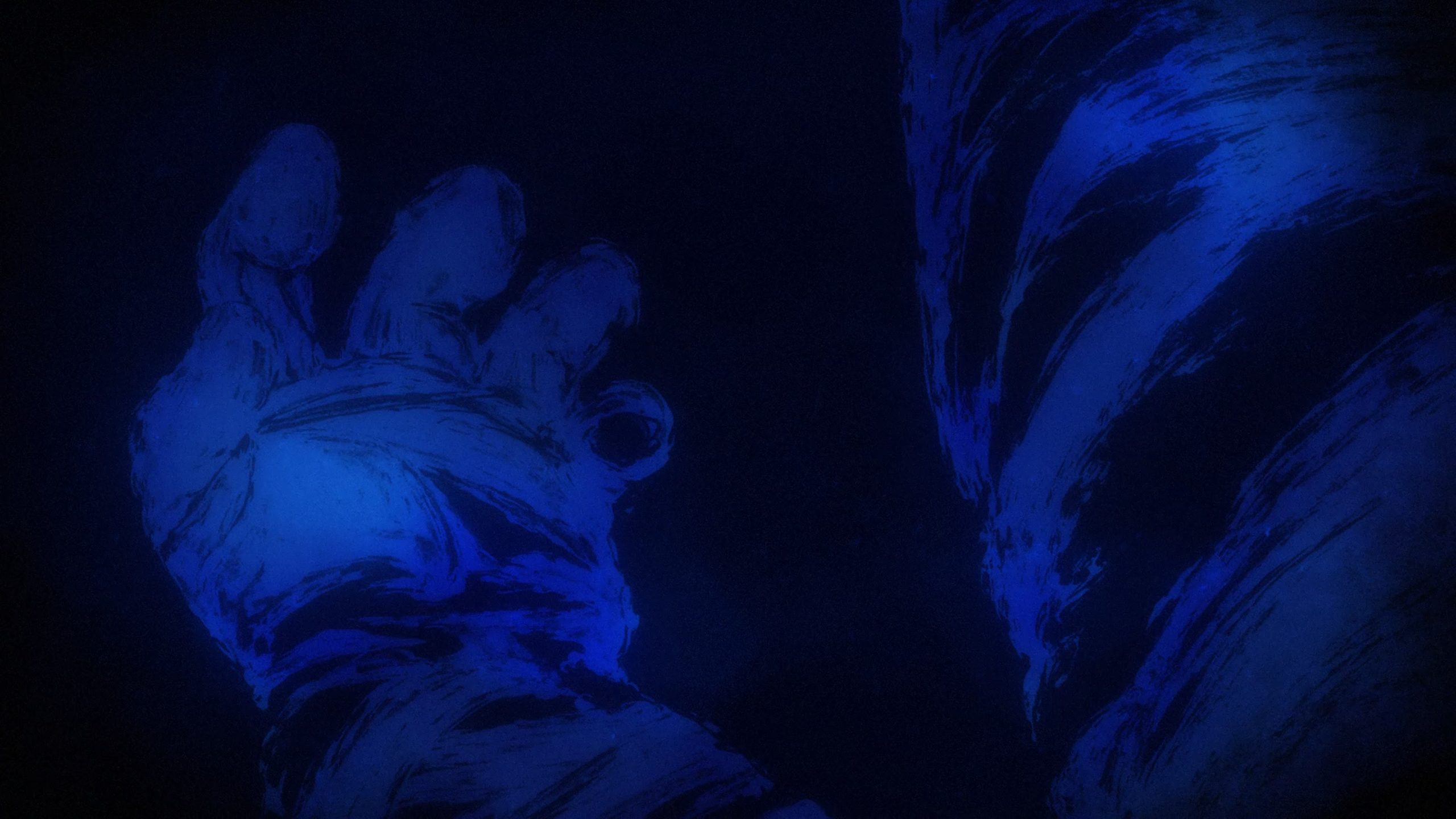
If that feels like a quality that Jaadugar could put to good use, episode #10 should prove you correct. Thanks to Boraqchin’s Machiavellian plots, we find ourselves in the spiritual realm alongside Ögedei and Tolui. Right off the bat, you can appreciate those Zenba-esque perspective distortions and looser, geometrical forms. A mystical realm, yet in the earthen choices of colors, one that very much feels born in Mongol imagination. One where nature plays a big role, but also where animals are abstracted until they almost become 2DFX, contrary to their physical rendering during regular scenes. These intense stylizations combine with the solemnity that has characterized Jaadugar’s depiction of rituals to make it clear that we’re in a different plane of existence.
Later in the episode, the fit between Zenba’s sensibilities and the comedic side of the series also becomes clear. His characteristic perspective exaggeration and snappier timing follow amusing characters like Töregene’s scaredy-cat son Güyük and the ambitious little runt that is Kyrgyzstani. Through various registers, we witness how the flavor that Zenba adds not only as director but as storyboarder and layout artist can enhance many areas in the show. And yet, those familiar with his work should be able to notice that his radical instincts are being held back.
Popular discourse tends to oversimplify the philosophy behind artistic choices, presenting false dichotomies that are completely detached from the reality of collective creation—and frankly, from art altogether. Sheer ambition and daringness, irreverence and looseness, willingness to stray from visual trends, diversity of techniques, creative freedom for each individual, and any such qualities are blended together under a meaningless banner of true, high art; one that ought to be attached to your favorite show, even if it’s a broadly marketable, conforming hit. With this reductive view, though, you miss interesting nuance like the areas where idiosyncratic anime chooses to be inflexible and restrictive. That’s very much the case with Jaadugar, a production that limits certain stylistic choices because it’s that committed to the identity it has forged.
It’s no secret that Jaadugar wants to minimize the usage of 3DCG; not ban it outright, as it’s occasionally present and still acts as the skeleton for the animation of many digital artists, but it’s not allowed to have a prominent role. Similarly, the show demands sparing visibility for digital lighting effects, wanting to give off the impression that it’s cel and BG layers that convey it. Given the weird stigma around digital techniques when it comes to artistic expression, those likely don’t read as restrictions to many viewers. And yet, Jaadugar is also a show that has very little loose animation and the type of radical deformations expected from artists like Zenba. Mandates to stay close to the design sheets are often associated with creatively barren anime, and yet here we experience that phenomenon in an inspiring series that nonetheless platforms unique styles. Artistic choices are never so simple, and that’s what makes them so interesting.
Of course, the limitations Jaadugar places aren’t arbitrary. The relative shackles on the character art exist because, in conjunction with the approach taken for the backgrounds, the show’s look is meant to evoke something akin to Islamic miniatures and classic Mongolian paintings. The series directors were preoccupied with how to balance its duality of space: the clearly farcical, flat look of Tomato Soup’s manga and a necessarily three-dimensional world, which they’d otherwise struggle to sell as a lived-in setting. In that paradigm, rocking the boat too much with radical distortions of perspective or super loose drawings could have compromised the identity they were after. The regulation of these aspects might not be absolutely perfect—Zenba’s episode suggests there was room for more idiosyncrasy—but it’s important to keep in mind that the restrictions exist because they have a vision, not because they lack it.
Episode #10 demonstrates the value of gradually building a story with that cohesive, focused approach. We’ve written at length about Tolui possessing an aura so dazzling that it influences the politics of an entire empire, and how that has consistently translated into visual choices. Chances are that Zenba personally animated one of the first instances that established this motif, so when he arrives to sacrifice himself for Ögedei, that blinding light feels familiar. His men saw in him the most straightforward heir to Genghis Khan’s supernatural presence, and that allows Jaadugar to reiterate the imagery it had successfully used before when he passes away; another falling star for the death of a larger-than-life figure, elegantly completing the sentence as Sitara finds out about this outcome.
Even in a more self-contained sense, the framing distills the interpersonal conflict brilliantly. Boraqchin set up Töregene to take the blame for endangering Ögedei’s life and indirectly leading to Tolui’s death, and as the oppressive visuals convey, she nearly trapped Sitara as well—quite literally having the protagonist in the palm of her hand. However, a well-timed reminder of Muhammad’s lesson to pursue knowledge to be better prepared to live your life helps her realize that she was never betrayed by Töregene. With an understanding that the two of them had been victims of the same ploy, Sitara faces Boraqchin once more. This time, the sly mask she wears and the stark separation in the storyboardStoryboard (絵コンテ, ekonte): The blueprints of animation. A series of usually simple drawings serving as anime’s visual script, drawn on special sheets with fields for the animation cut number, notes for the staff and the matching lines of dialogue. More confirm that a line between two factions has been drawn.
With only two episodes remaining before the end, the common approach would be to entrust the final one to the series directors if possible. Instead, Jaadugar commits to allocating material to the most fitting individuals, hence why the storyboarding duties in episode #11 were mostly entrusted to Yamada and Gongora. If you’re curious about what Ryouta Aikei was responsible for, well, so are we; despite also being credited for storyboarding, neither series episode director Takuya Fujikura nor the official accounts alluded to his work, which they’ve been doing for everyone else in similar roles. Given his tendencies, perhaps he’s responsible for certain moments where the camera takes an uncharacteristically proactive role.
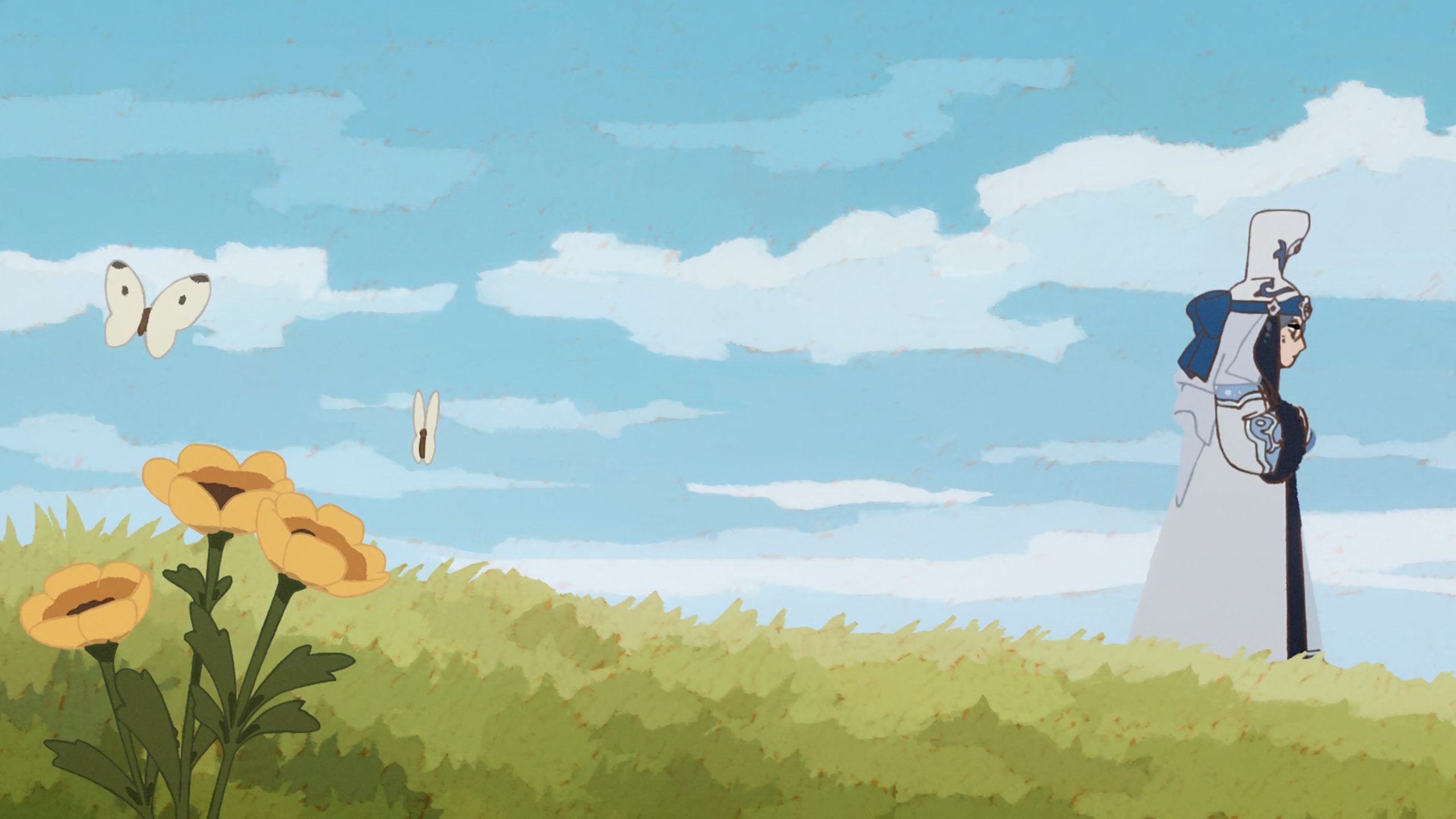 Either way, it’s clear why Yamada seized control for the first half, while Gongora did the same for the second one. Episode #11 is the final chance to establish why these people fight, so each series directorSeries Director: (監督, kantoku): The person in charge of the entire production, both as a creative decision-maker and final supervisor. They outrank the rest of the staff and ultimately have the last word. Series with different levels of directors do exist however – Chief Director, Assistant Director, Series Episode Director, all sorts of non-standard roles. The hierarchy in those instances is a case by case scenario. focused not only on their favorite character, but the aspects of their personality they excel at conveying. In Yamada’s case, that means fleshing out her beloved Boraqchin. For all the ruthless schemes that have earned her the title of witch in Sitara’s eyes, her extended backstory in this adaptation paints a very human picture.
Its original introductory scene shows her as a woman fascinated by natural phenomena; just a cute moment with her wondering about the snow, but it organically builds up to her later obsessions with the alchemical properties of minerals and the concept of mortality. It’s this fundamental curiosity that resonates with Ögedei, who in turn shares a dream for a vast empire connecting civilizations that strikes a chord with Boraqchin. This is delivered especially well in the anime, which turns a regular speech into a bright vision taking shape. While that aspect of her personality and Ögedei’s encouragement are what fuel her more ambitious plans, the individual who grounds her and provides emotional stability is clearly Möge. More than ever—especially under a director like Yamada, who was born to storyboard such a cheerful person—you can feel Boraqchin’s love for her, and the quiet sadness when she pushes her away as if not to taint her.
As we move on to the second half, we transition to Gongora’s storyboards. And, on a character level, back to Sitara’s point of view. The adaptation emphasizes her worries about Töregene through both the script and the animation, leading to some of the most characterful sequences in the entire show. As valuable as that is, the most striking and thematically important scenes come near the end. Reality can be so cruel that victims may need to process their misery in a simplified way, giving them singular enemies as an outlet for their pain and hatred. Jaadugar isn’t merely a story about the ruthless Tolui slaying Sitara’s city to claim a book for his whimsical wife Sorghaghtani, even though he was indeed ruthless, and she is far from sinless. Having lost everything to incomprehensible tragedy, though, Sitara’s only way forward was to put a target on their backs. And that has all fallen apart.
The book she sought to recover is in her hands, but what meaning is there to it? Boraqchin was the one who recovered it and forwarded it as a bribe, and Sorghaghtani immediately gave up on everything after Tolui’s death. To her, who lost everything and fought to rebuild a semblance of a life, a more privileged enemy’s quick capitulation is one of the most infuriating experiences in her life. Gongora conveys that fury through flashbacks of Sitara’s lost family and the moment she decided to blame Sorghaghtani for their deaths, flowing so choppily that you can feel the overwhelming rage. Beyond the effectiveness on a character level, this connects with what Gongora has always seen as the main theme of Jaadugar: freedom. He began the series with an original scene of her trying to escape captivity as a young slave, and near the end of this season, he reinforces the feeling that she’s trapped in a trauma that can’t be unlocked by a cheap way out.
We’re finally approaching the last episode, and after so much praise for the series, it’s also about time to address some issues around it. In our write-up for the first half of Jaadugar, we noted that designer and chief animator Yoshida had been critical both of the schedule and the preparedness of some staff members; it’s worth noting that he has been supportive of Saru’s young talent, so his complaints about whether people truly understood the job of a key animator feel more aimed at the countless subcontracted companies. The series remained in production well into its broadcast, and even when it finally wrapped up, Yoshida felt the need to point out he was exhausted, and this was the tightest schedule he’s ever had to deal with. So much so, that he replied to a viewer who hadn’t even directly reached out to him to double down on that stance. His renown has kept him relatively shielded from the madness of modern TV anime production, but Saru’s super busy, concurrent production model was more than enough stress for him.
To some degree, that type of burden always ends up affecting the quality of the show. By all means a high-quality anime on the whole, especially by current standards, Jaadugar has also been bumpy in spots. Certain episodes—#09 comes to mind—have uneven, less polished character art than the norm. At some point, the most ambitious sequences in the show become a coin flip about whether they’ll be fully realized or stumble a bit. Right before the incredible appearance of Toshiyuki Inoue on episode #06, an impressive rotation shot falls apart in the end; just pay attention to the way that Töregene’s eyes melt into position before it stops. During an otherwise excellent scene in episode #09, a grand sweeping shot becomes unintentionally choppy and rough for no fault of key animator Hiroki Naekawa. These noticeably (if you’re attentive to these details anyway) unpolished spots may not have arisen with a much more comfortable schedule, and an environment that didn’t force egregious levels of outsourcingOutsourcing: The process of subcontracting part of the work to other studios. Partial outsourcing is very common for tasks like key animation, coloring, backgrounds and the likes, but most TV anime also has instances of full outsourcing (グロス) where an episode is entirely handled by a different studio. like Saru does.
Out of all the recurring rough corners, the most notable of all is unsurprisingly the in-betweening. For the longest time, the industry’s lack of standards or even contempt for the job has gradually degraded what should be a fundamental step. These issues are so recurring across the landscape of anime that even viewers without extensive knowledge about production matters are now acquainted with terms like douga. And yet, even those who are more deeply in the know will often miss the nuance of what that entails.
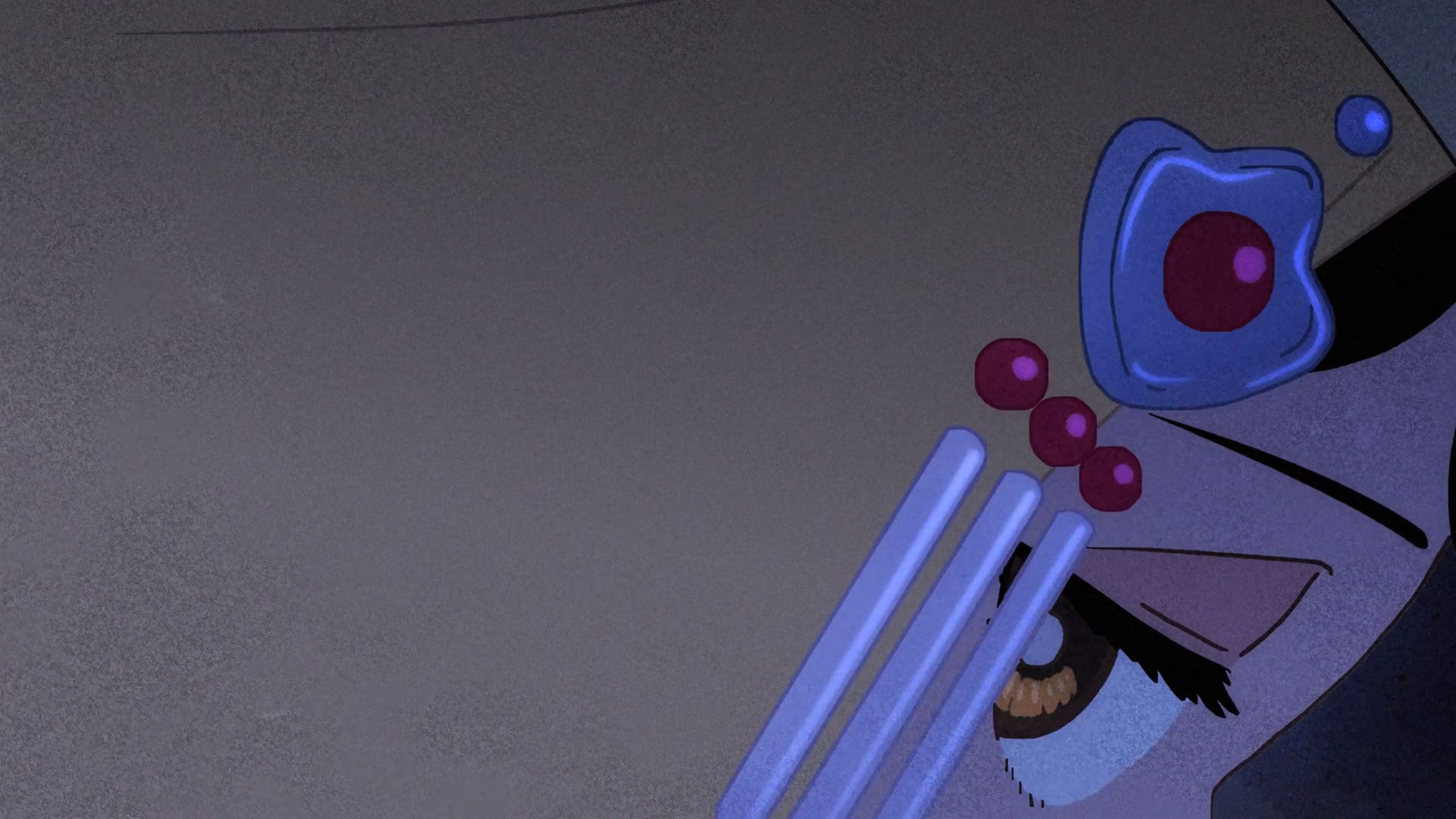 The English word in-between makes you imagine the drawings that must be inserted in the gaps separating each sheet of key animationKey Animation (原画, genga): These artists draw the pivotal moments within the animation, basically defining the motion without actually completing the cut. The anime industry is known for allowing these individual artists lots of room to express their own style., meant to complete the movement in an appropriately smooth fashion. Although that’s part of the job, douga is an all-encompassing job; every drawing in a finished sequence has followed the in-betweening process, whether it was freshly drawn or traced from the original keys. In the former case, you’d be specifically looking at nakawari (中割り), which holds the same literal meaning as the common English word.
This is worth pointing out now, not just because staff struggles should be highlighted just as much as their successes, but also to consider such challenges as the motivation behind interesting solutions. Over the last couple of episodes, Yoshida arranged two of the most glamorous cameos in the entire show. One of them was the return of Masashi Ando, fresh off his wonderful storyboards for episode #06. The two bonded through Studio Ghibli, just like they did with living legend Shinji Otsuka, who helps bring the penultimate episode to a close. It’s no surprise that Science Saru chose to share their sequences to promote the broadcast, and if you take a look at them, you may notice something: both scenes feature full key animationKey Animation (原画, genga): These artists draw the pivotal moments within the animation, basically defining the motion without actually completing the cut. The anime industry is known for allowing these individual artists lots of room to express their own style. (全原画). This doesn’t mean that they’re full animation where each of the 24 frames is a unique drawing, but rather that these highly prestigious artists drew as many distinct poses as the scenes were meant to have, with no room for those pesky nakawari.
Anime’s chronic issues with in-betweening aren’t limited to shoddy drawings filling those gaps; they have a lot to do with tracing, with software, with the loss of authentic linework and kicking the can forward for already burdened compositing teams to falsify nuance and texture, and of course with the inescapability of scheduling and budget constraints for what is still seen as lesser work. It’s never not about labor! While skipping the need for nakawari doesn’t magically solve all problems, veteran artists who take pride in their work can at least bypass the common issue of complex movement intermittently melting into wobbly cuts. Otsuka and Ando enjoy this approach in the first place (especially the former), but it feels meaningful that they went the extra length even though they had little time at their disposal; in Ando’s case, that even demanded the help of Ruotien Ting to polish up the sequence, which fortunately turned out to be excellent.
In recent times, many older creators have lamented that because of the rise of certain tools and the general decrease of thorough training systems, younger animators have a restricted ability to convey things—not because of a particular flaw of their own, but because they aren’t used to drawing certain things. What notably began with the loss of artists capable of animating mechs has now spread to areas as fundamental as proper perspective. However, speaking to Jaadugar‘s author during another conversation hosted by Souffle, Yoshida adds interesting nuance as a reputable veteran animator in his 50s. After all, he already paints his generation as one that didn’t get as much of an opportunity to draw animals as his predecessors and thus struggled with them, compared to the limitless ability of folks like Hayao Miyazaki. Yoshida explains that, when they had to work on Princess Mononoke, he basically had to learn by tracing older animators off the clock. A particularly interesting detail in this regard is that, when talking about the sequence with horses in Jaadugar‘s finale, he proudly said that if you want to draw these animals, it’s gotta be Masashi Ando. The punchline? They were born the same year, Ando simply had a bit of a headstart in the industry. That’s how fast things can change!
There is no better proof that Jaadugar’s team tried to save their best for last than the directorial lineup for the finale. On some level, it’s also pleasantly unsurprising; we’ve written at excruciating length about China’s love for Yamada, so of course he took another chance to storyboardStoryboard (絵コンテ, ekonte): The blueprints of animation. A series of usually simple drawings serving as anime’s visual script, drawn on special sheets with fields for the animation cut number, notes for the staff and the matching lines of dialogue. More and co-direct an episode for a project where she’s deeply involved. On the other hand, the surprise factor of featuring Ryousuke Nakamura as the director for the first half of the episode is unmatched. Beyond his skill and sensibilities—already newsworthy—this is simply a type of job he rarely accepts anymore. After the interesting yet bumpy experience that was Grimgar a decade ago, it has become exceedingly rare to see him and his partner Mieko Hosoi show up on anything but an opening, ending, or at most a short film. He reacted to this episode by wondering if it had been two decades since he last directed someone else’s storyboards (Grimgar aside, it was Kaiji in 2007), but 10 years without Nakamura episodes on TV already feels outrageous.
How did this duo fare, then? Before the obvious reveal that they did great, it’s worth noting that this is true of series composer and screenwriter Kanichi Katou as well. Jaadugar hasn’t been afraid to flesh out the script and alter the order of the events, and the finale is an excellent example of how much you can gain from what appear to be tiny changes. Despite not being shy about reiteration and increasing the dramatic volume, it has remained clinical when doing so. It hasn’t become a tedious show that constantly repeats things the viewer already knows, but in an arc that hinges on the bond between Sitara and Töregene, the anime underlining the former’s desperation to save the latter much more strongly feels like welcome emotional clarity. Just by switching the order of certain scenes, the TV show maximizes its momentum, and it even feels more aware of Sitara’s standing; you can feel that much in the changes regarding when and how she finds out about information relating to high-standing individuals.
That includes, for example, her surprise when hearing about Sorghaghtani’s decision. That is to say, her refusal to take the easy way out of the conflict that had been prepared for her, in the form of an arranged marriage. As it turns out, Sitara’s speech to her sworn enemy revitalized her, effectively establishing a new powerful party in the ongoing fight for control of the empire. Amusingly, that is also what Töregene will proceed to do in this very same episode, so Sitara ends up encouraging both her favorite and most hated person to make an identical choice.
Before that point, though, the interesting fingerprints of the directors are already all over the episode. Chinashi has been leaning more on heavy layering and masking in recent times, as seen in more comedic environments like his episode of Puniru. While that trend continues, Jaadugar #12 instead employs it to enhance the exposition and connect present and past. When it comes to the usage of these techniques, the most striking example is Töregene recalling how Boraqchin led her astray. Not only is the delivery sleek, but it culminates in a beautiful shot where both of them look past each other—exactly the opposite relationship she has with Sitara. After all, both this awaited meeting and the climax of the entire show are staged so that the two look at each other in the eyes.
Right before that beautiful closure to their journey, we’re treated to another stunning face-to-face between Sitara and Ögedei. The latter asks the protagonist to share her knowledge about the stars, and the storyboards themselves turn into pure character writing. Sitara’s view of the universe is delivered through aggrandizing, sleek storyboards, sustained by what she believes must be irrefutable science. It’s a proud, complex, and increasingly passionate speech that contrasts with the unassuming simplicity of Ögedei’s beliefs. We as the viewers know that Sitara is in fact wrong, but I believe that she feels like she might be as well. Sitara is a cocktail of contradictory emotions, with pride about knowledge linked to the people she loved, anger that she has constantly found herself thinking that there is much to learn about the Mongol empire, and fear that she might still know nothing herself; after all, this is the same episode where she admits to Töregene that she’s not all that wise. Yamada talks about Sitara as a person with earnest curiosity, who can’t help but feel attracted to the beauty and knowledge of her captors every now and then, but the beauty of Jaadugar is that she’s also burning with petty yet just hatred for them.
This could paint the picture of Ögedei as a humble, well-meaning ruler, but the series’ depiction of the Great Khan remains nuanced to the end. Sure, his attempt to make Sitara and Töregene sounds as benign as the dream to create a multicultural trade hub, but his body language makes it clear that he will do it through oppression; the world and these people, in the palm of his hand. His disarming power, expressed in a way that doesn’t turn him into the easy enemy that Sitara is always looking for, leaves her physically and emotionally exhausted. It’s no exaggeration to rank the ensuing sequence among the very best in the entire show, with Sitara’s increasingly brisker walking—key animated by the excellent talent that is Hiroki Uchiyama—and her explosive frustration, so small and human when surrounded by imperturbable nature.
Fortunately for her, Töregene arrives with an extended hand; one that quickly holds a flower, because the anime is happy to go all-in on the romantic framing between these two. Sitara and her have allowed their complicated situation and other people’s machinations to create a nearly irreparable rift between each other, so Töregene’s request to team up for good is introduced through uncomfortable, extreme Dutch angles. And yet, Sitara is happy to accept, so one step forward is all it takes to even the field and reinforce their partnership. We noted that episode #11’s theme was why they fight, and right before the end, China’s storyboards provide another beautiful example of the friends and foes that motivate these two. Their initial partnership was forged under the promise of becoming the storm, but the jada stone that was supposed to summon it was spent, co-opted by one of their enemies. And so, to defeat that witch, they must become one themselves too.
If that was the last we ever saw of Jaadugar, it would already be an excellent show. It goes without saying that it’s an incomplete story if you simply observe the events, but it ought to be equally obvious—at least to the type of person inclined to watch anime like this—that there is so much more to storytelling than that. Its characters have undergone journeys that stand on their own, even more so thanks to the refined delivery of this adaptation. While there are aspects where I feel Tomato Soup’s work is simply incomparable (I stand by the cultural importance of patterning that is much hazier in the anime), this team has used the benefit of hindsight, ample room to add connective tissue, and simply brilliant direction to put together a show I wholeheartedly recommend.
Am I saying this to calm down all the people who are rushing to ask for a sequel? Oh, hell no. Jaadugar’s ideas may be fascinating, but so is the more tangible story that is being told, so there’s plenty of reason to ask for it to continue. There’s no particular argument to refute people’s faith that it will happen either; speaking to Realsound, Gongora expressed his desire to continue the series until its very end, which contrasts with how timid staff members tend to be when asked about unannounced sequels. That said, I hope people can muster enough patience. We’re talking about a monthly manga that only just ended a maternity break, without having amassed enough material for a similarly sized season quite yet. While the author is enough of a fan of the studio to facilitate their work even if it involves sharing unpublished materials, we’ve also discussed at length how Saru schedules leave enough to be desired as is—Yoshida has made his feelings clear enough this time. If you can’t wait, a 2-3 year-long nap may be due.
Having written so much about its production, I also have to add that Jaadugar has been a fascinating little project that I believe we’ll be looking back at in the future. Yoshida and his guests may be reputable veterans, but it has also been an interesting showcase of up-and-coming talent. This includes Abel Gongora himself, whom I believe has a clearer identity as a director now that he has multiple projects under his belt. Above all else, I appreciate the edge he added to Sitara, which she may have lacked if this had been a Naoko Yamada-led effort. Not that I blame anyone for having desired one of those, but given that a certain something is already in the making, you’ve got something to look forward to in the future.
Support us on Patreon to help us reach our new goal to sustain the animation archive at Sakugabooru, SakugaSakuga (作画): Technically drawing pictures but more specifically animation. Western fans have long since appropriated the word to refer to instances of particularly good animation, in the same way that a subset of Japanese fans do. Pretty integral to our sites’ brand. Video on Youtube, as well as this SakugaSakuga (作画): Technically drawing pictures but more specifically animation. Western fans have long since appropriated the word to refer to instances of particularly good animation, in the same way that a subset of Japanese fans do. Pretty integral to our sites’ brand. Blog. Thanks to everyone who’s helped out so far!
Become a Patron!