 Skip to content
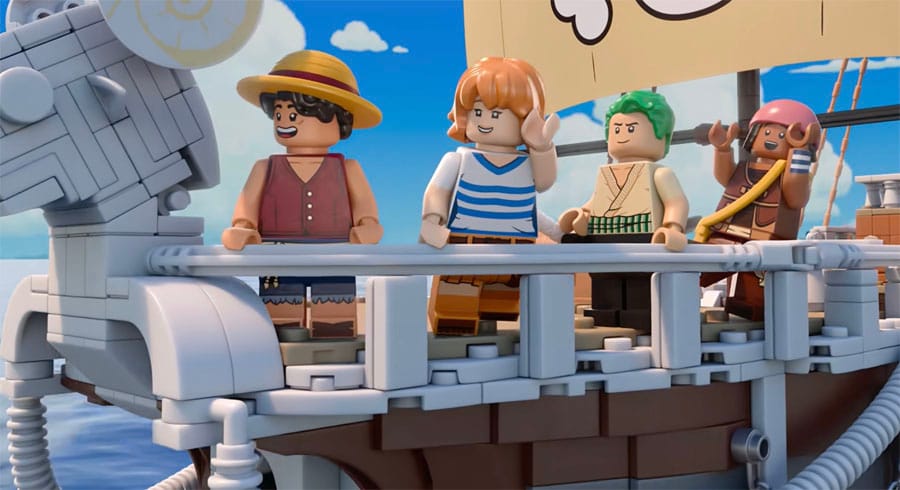
Executive producer Tom Hyndman, who worked on the live-action film. one piece series and was a writer for the animated series harley quinn program, discusses the build-up to the two-part animated special event lego one piece. It premieres tomorrow, Tuesday, September 29, on Netflix. (This Animation Scoop Q&A was edited for length and clarity.)
Jackson Murphy: Congratulations on this. I screened the first part before our conversation and it’s actually very funny and very energetic. I know you worked on the live-action series of this manga adaptation. Did you ever think we’d go in the animated direction with this too?
Tom Hyndman: I think when I was working on live-action, probably not, but as soon as the idea of doing it in LEGO came up, I thought, “Oh yeah, that’s a very obvious direction to go. Of course we’re going to do this.” So, it became very clear very quickly.
JM: I’ve always loved this style of LEGO animation, whether it was “The LEGO Movie” franchise or “Piece by Piece,” the Pharrell Williams documentary, which was phenomenal. How do you imagine something like this as LEGO CG? What are the first things you need to do to make this a successful LEGO animation experience?
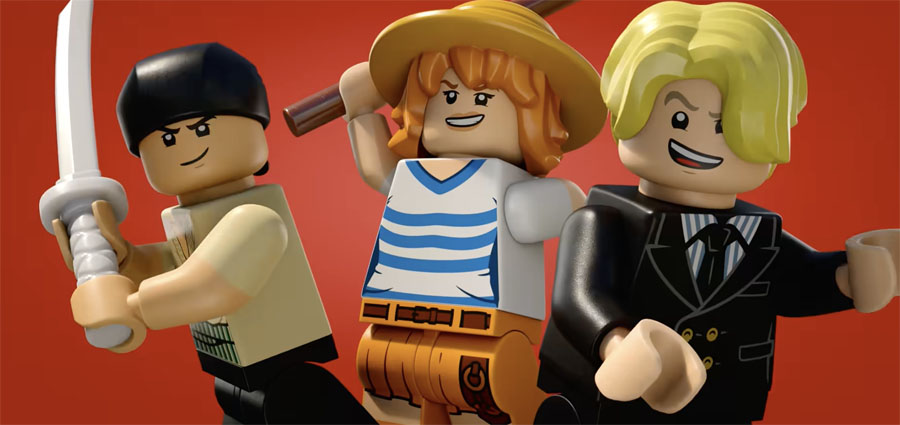
TH: I think we’re a little lucky because we already had all the signs as far as the story we needed to follow. And from there, all you have to do is look for those special LEGO moments. Where can we build something here that’s fun and fun, or can we push the LEGO humor here? So there were a lot of LEGO passes once we knew what the story was going to be. And that continued the whole process just because the fun thing about LEGO is that you can never go too far with it, which we discovered. Whatever you can think of, we can probably put it in there and it’ll probably work.
JM: The possibilities are endless. You are very right about that. So, for die-hard “One Piece” fans, where are we on the timeline? Tell us how we got to the first part. For me, this was my introduction to “One Piece” and now I want to explore more.
TH: There are two episodes. Each episode is basically the first season and the second season live action. If we go by the manga, the first 200 chapters are the first two episodes. I think what we’re trying to do is add something new by having Usopp be the one to tell the story. So hopefully die-hard fans will feel like it’s something new and fun to watch and not just a retread of stories they’ve seen or read thousands of times. So that was our hope with everything.
JM: I think everyone will really enjoy this, because there’s a lot of movement with the characters, with the different sequences and the places we go. What do you love about moving with a special like this?
TH: I think it allows you to have a lot of fun, make quick jokes, keep the pace up, it never drops, so you really feel like you’re in it, and you’re in it for 30 minutes. And then you can take a breather, but until those 30 minutes are up you should be ready to go. It was definitely a difficult process, because we’re basically cutting 8 hours of television down to 27 minutes, but I think that also lends itself to LEGO, the kind of frenetic energy and craziness that it gives off. Breaking everything together almost makes it better for LEGO.
JM: Yes, you can clarify points quickly with LEGO and get to the point of some things. But yeah, a lot of fans of various franchises are like, “Oh, I wish you’d include that part. I wish you’d include that part.” But I think for something like this that has so much freedom, yeah, it all makes sense. But was it really a challenge to condense eight hours into 27 minutes, but feel like you still had a full arc within that?
TH: It was hard at first. But then we found the central moments that we really knew we needed to keep. Luckily, you have two seasons of television to base everything on, which definitely helps. But yeah, it was like, “How are we going to take those moments and then surround them with as much LEGO stuff as humanly possible?”, which I think we did pretty well.
JM: There are some great sound effects here when it comes to the characters. Did you have a lot of fun working on it?
TH: We did it. There are a lot of great people working on it, just pulling sound effects from everywhere. It was a fun collaborative effort on sound effects about what we can do, what funny noise we can use, things like that. So yes, definitely.
JM: And these also lend themselves to the action sequences in the various locations. We go to a restaurant, we have water, there’s a lot going on. What was your favorite setting to explore in “LEGO One Piece”?
TH: Baratie’s part is big and fun, and has a lot of good, fun action, but also a lot of humor. So I think Baratie is probably the one that stands out the most to me. And then the Arlong Park stuff is really fun too. I was able to include a “I think you should leave” joke, which was funny and I hope people notice. But yeah, I think Baratie is probably the craziest, the funniest, and the craziest.
JM: Humor is very key. It was very key to the LEGO movies, and it’s very key to something like this, and even in Piece by Piece as well. Humor is very important because you’re in a very fun LEGO atmosphere and you want to share that joy and wit with everyone, so I’m glad you found that humor is an important part of this too.
TH: Yeah, I think everyone who worked on it knew that we wanted it to be as funny as possible, and basically, up until Locked Cut, we were trying to find more and more moments where we could add a little goofy humor to it. It’s definitely a big part.
JM: You also wrote about “Harley Quinn,” which has been a huge hit on streaming, and people love that character in various forms, including animation. How do you think characters come to life in animation? You’ve written for that, you’ve written for “LEGO One Piece.” What do you think of the power of animation and seeing a dynamic character like Harley Quinn, or seeing these “LEGO One Piece” characters really come to life?
TH: I think it gives you a little more freedom with energy and doing things over the top. Obviously you still want to keep those basic elements of all the characters, but the fun thing about animation is that you can really push them to the limit. And that can only be done in animation. If you tried to do that in live action, it would probably be a bit annoying. But in animation, it’s almost part and parcel of everything. So it gives you that freedom, which is good.
JM: Absolutely. And this special also talks about dreams. There is a scene in the first part where each character shares dreams and goals. Has animation always been a dream for you? Was telling stories always a dream for you?
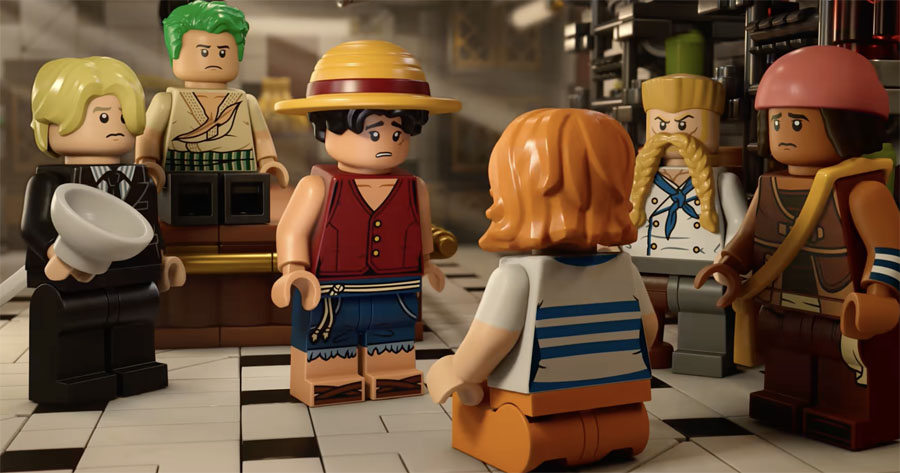
TH: Telling stories, definitely. Animation just happened. And I’m glad it did, because it’s great and I want to keep working on it. I always wanted to do something in this world and luckily it worked out, which is great. But yeah, dreams are a big part of One Piece, and I think it’s a very important theme, especially now… This idea of coming together to help everyone achieve their dreams, instead of just trying to do it on your own, and the importance of that community helping you, which is something that always spoke to me about the property.
JM: Teamwork.
TH: Exactly.
JM: That’s also a huge component when it comes to making animation. And now I think that with what you’ve done with “Harley Quinn,” what you’ve done with this, you’re going to inspire kids and even adults to do things, to create things. Do you love having that kind of impact and inspiration with something like this on people?
TH: Yes, it’s amazing. If I can get one person to get into this, like it, and feel like they can do it, then it will certainly be a success for me.