Welcome back, folks! Not sure how common this is with other people, but I sometimes listen to podcasts about stuff I’m only tangentially interested in. Two major examples are the Poorhammer podcast, which covers Warhammer 40,000 (and sometimes Age of Sigmar), and Regular Car Reviews, a YouTube channel made by some Pennsylvanians that review cars (go Birds). Now, I’ve only got a second-hand at best understanding of Warhammer 40K, and I don’t even have a driver’s license. But I really like these channels, and I listen to each new episode as soon as I can. It helps that their hosts are surprisingly nerdy; Brad and Eric from Poorhammer name-drop One Piece stuff every so often, and Brian doesn’t exactly do the best job of hiding his being a furry with a long history of loving video games. But even so, I appreciate their insight. I love hearing Brad and Eric explain minutiae about specific Warhammer units and their byzantine rulings, and Brian has a fantastic read on not just the mechanical virtues of specific engines but the social, economic, industrial, and political contexts that led to car models being the way they are. More than being authoritative, they’re experienced. You can fake authority; plenty of folks make good money from that. But you can’t fake lived-in domestic love for an old, crappy car.
This is…

Major Shake-Up with Fate/Extra Record
Type-Moon fans are used to waiting ages for stuff to come out, like Witch on the Holy Night or the Tsukihime remake. The current project in limbo was Fate/EXTRA Record, a remake of the original PSP Fate/EXTRA released on the PSP back in 2010. Fate/EXTRA Record was announced back in 2020 in honor of the original game’s 10th anniversary, but it’s seen numerous delays since—including an official announcement from this past March that it would be going on hiatus. We finally have some updates on the project, but it’s not the good news folks hoped to hear.
First change: Aniplex is now in charge of publishing the game. This is after the original publisher, Bandai Namco, dropped the project back in March. This also comes with some staff changes at Studio BB, the sub-studio at Type-Moon handling the development on Fate/EXTRA Record. Also, the current website and Twitter page for Fate/EXTRA Record will be shut down on September 7. Famitsu also announced that Studio Meteorise will be developing the game, instead of Type-Moon Studio BB. You might remember Meteorise from Atelier Resleriana and Tribe Nine.
Second, Kazuya Nino isn’t in charge of the project anymore. After serving as the studio director for Type-Moon‘s Studio BB, he announced he would be stepping down “for personal reasons,” and stripping his name from the credits as a result. Nino himself has an extensive resume, having directed the original Fate/EXTRA along with other beloved titles like the Dragon Quest Builders games at Square Enix. (In a way, Nino leaving Square Enix to work on Fate/EXTRA Record paved the way for his former team to produce Pokopia, you could say.)
Speculation has been rampant regarding the matter. As usual, I think it’s best to distrust rumors and off-the-cuff claims. Considering Nino left Square Enix to work on this project specifically, it speaks to it being a labor of love for him. Maybe someday we’ll find out what happened. Maybe not. In the meantime, Fate/EXTRA Record will be releasing on January 28, 2027 for the Nintendo Switch, PlayStation 4, PlayStation 5, and Steam—and a new addition, the Nintendo Switch 2.
Phantasy Star Universe Celebrates its 20th Anniversary
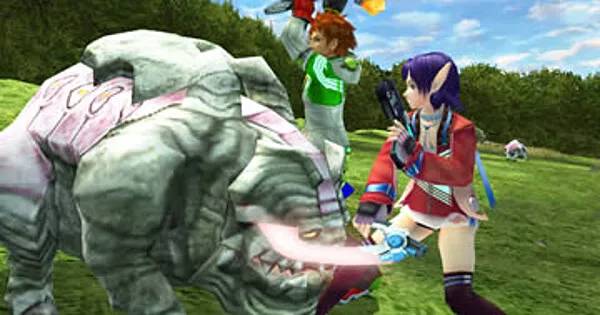
You can’t make me cry, I’m a Sega fan. I’ve already been hurt. Oh, it’s been how long since we got a new F-Zero game (that isn’t F-Zero 99)? Sure, that’s real tragic—I say as my long-scarred soul continues to mourn Ristar. I can’t genuinely invest in any remorse over Star Fox getting another Star Fox 64 do-over. At least it’s something, which is way better than the oubliette that Comix Zone has been shoved into since the Clinton administration. Nintendo made an honest-to-God sequel to Famicom Detective Club. Meanwhile, if we’re lucky, we get to see a lobotomized SpongeBob SquarePants drive a hamburger past cardboard cut-outs of Vectorman and the Bonanza Bros. Another Sega franchise celebrates an anniversary that went largely unnoticed, even though the game is still technically alive: Phantasy Star Universe, which came out on October 24 of 2006.
゚+.*.。・・・・・・・・・・・・・・・・・・・・・。゚+
『#PSU』祝20周年🎉
゚+..。・・・・・・・・・・・・・・・・・・…。*゚+本日、『ファンタシースターユニバース』は
PlayStation®2版とWindows版の日本発売から20周年を迎えました✨… pic.twitter.com/zTB2vWSyrR— PhantasyStarOnline2 (@sega_pso2) August 31, 2026
Now, Phantasy Star Universe was a Phantasy Star spin-off. And Sega hasn’t really made a new Phantasy Star since 1993’s Phantasy Star IV: The End of the Millennium (released in North America in 1995). The classic RPGs had a conclusive ending, and with the death of director “Phoenix” Rie Kodama, I don’t blame Sega for not taking another crack at the series. RPGs can be hard to sell, hence why there hasn’t been a new 7th Dragon since 2015. While the original Phantasy Star series was over, consigned to the dusty drawer of compilation filler from here to infinity, Sega did manage to breathe life into the franchise with Phantasy Star Online back in 2001. Phantasy Star Online was a big deal. In issue 200 of Electronic Gaming Monthly, editor Mark Macdonald mentioned an anecdote where he was playing the game over the winter when a fuse burst in his apartment. With his landlord gone for the holidays, he did the most sensible thing: pulled out the fridge from the kitchen, plugged his TV into the revealed socket, and kept playing PSO.

© Sega
Online games weren’t specifically new in 2001. PC players had stuff like Multi-User Dungeons or Ultima Online. But PSO was captivating on its own: a sci-fi action-RPG with customizable characters, endlessly replayable missions, and tons and tons of loot to hunt down. It was a huge hit in both North America and Japan. Back on the Pantheon of the Blood God podcast I guested in, host Victor made a very salient point that Phantasy Star Online inspired a lot of the concept of The World in .hack, from missions and dungeons that were meant to be repeated to the random rare items that were the goal of every player. They just replaced the sci-fi setting with vaguely Celtic imagery. And PSO fans were loyal; the last official server for PSO wasn’t shut down until 2010, nine years after the original launched. There’s still a dedicated community playing the game in its myriad releases and forms to this very day, huddled together on private servers. It’s a game that shows its age these days in a lot of obvious ways, but it’s still a very “zen” experience, from the techno-orchestral music to your rhythmic attacks.
And it’s here that Phantasy Star Universe comes in. Sega wanted to follow up on that success, but they knew that they had to adapt for the times by 2026. World of Warcraft had effectively codified how an MMORPG should play, after all. And while there was still a lot of love for PSO, there was plenty of room for improvement. PSO‘s online and offline components had the same missions, for one, with the same stories. This was fine in 2001, and made even easier with PSO‘s subsequent GameCube port and its split-screen offline multiplayer. This wasn’t going to fly in 2006. So an offline mode was needed, which meant the games needed a story. Where the original Phantasy Star games took place on the Algol star system, and PSO took place on Ragol, PSU introduced players to the Gurhal star system. Protagonist Ethan Waber is faced with the prospect of joining GUARDIAN, an elite peacekeeping unit. Unfortunately, his plans are stymied by the presence of SEED: a bizarre alien phenomenon where meteors crashing on the nearby planets cause local flora and fauna to mutate into monsters. Things are complicated further by the political strife between the species in the Gurhal system; while Humans created CASTs (robots), Newmen (genetically-modified humans) and Beasts (the same, only more feral-looking) to help colonize the sector, poor treatment from humans led to a five-hundred-year race war across three planets that has only just seen a century of peace.

© Sega
Right away, players encountered a much darker and complicated story than the original PSO when PSU launched in 2006 on PlayStation 2 and Xbox 360. And while Ethan wasn’t exactly winning awards for being the most interesting protagonist, he was a protagonist, and a good way to introduce newer players to the various weapon types in PSU before taking the plunge. And you’d have to play as Ethan; players needed to beat missions offline before trying out the online mode. But unfortunately, there were bigger problems with PSU. Now, the mission structure wasn’t the best; missions were effectively only slightly improved from the original PSO, so it was a chain of rooms filled with monsters and an item box at the end. And it was despairingly easy for an unscrupulous host to drag you along a mission, only to kick you at the last minute to reap all the rewards for themselves.
Unfortunately, this was only the beginning of PSU‘s problems. A much larger issue was Sonic Team‘s management of the game—which was decidedly poor. Basically, Sega of America and Sega of Europe shared certain duties, but Sonic Team over in Japan had to sign off on everything. If there were problems that needed fixing—hacking, exploits, cheaters, so on—there was a complicated amount of bureaucracy that had to be undergone first. Not only were former employees (allegedly) affected, but this led to a lot of the fanbase giving up on the game. By the time PSU‘s expansion Ambition of the Illuminus released, most players didn’t bother. Which is a shame; Illuminus changed mission structure to make online play less repetitive, and also gave a story mode where players could use their own protagonist.

© Sega
Here’s where things get a bit nutty, though; Phantasy Star Universe didn’t really end. Sure, the servers shut down in 2012. But the story continued—on PSP, courtesy of Phantasy Star Portable. The stories continued from the PSU games, still taking place on Gurhal and referencing SEED and the GUARDIAN. And the Phantasy Star Portable games were pretty great. So much so, in fact, that they received two sequels: Phantasy Star Portable II, and Phantasy Star Portable II: Infinity. Infinity never released outside of Japan, and more’s the pity; fans hold it up as one of the best games in the series. A lot of its structure was informed by the runaway success of the PSP Monster Hunter games, but the proof was in the pudding. You could even import your character between the games. And once Sega started making moves to produce Phantasy Star Online 2, they gave players the option to import any leftover Phantasy Star Portable currency to PSO2. (Of course, Sega sure dragged their heels for almost a decade in releasing PSO2 outside of Japan, but that’s Sega for you.)
We need to take a moment to mention a little offshoot of the Phantasy Star Online family, Phantasy Star 0. Released in 2008 on the Nintendo DS, the game was intended to serve as a proper continuation of the original Phantasy Star Online (hence the “0;” it makes the game’s shortened title look like its predecessor). It brought back PSO‘s old system of race-and-job-based classes (Male Human Hunters being HUMar, Female CAST Rangers being RACaseals, etc). It even introduced a few new race/class combinations to pad out some missing combos from PSO, like HUMarls (female human hunters) and HUNewms (male Newman hunters). It brought back Mags, the adorable item-eating partner robots that could evolve into new forms and summon Photon Beasts for specials. And if you paid attention, the story hinted at PS0 being a prequel to PSO. But it didn’t quite hit the high marks as PS Portable, let alone PSO. The art style was much more colorful and seemed aimed at a younger audience, the controls on the DS were a bit clunky (God help you if you were playing a Force), and you only had three save files. Also, the North American release replaced the J-pop intro with a generic instrumental.
In honor of PSU‘s 20th anniversary, game director Satoshi Sakai shared a message with readers. (Machine translation follows.) Says Sakai, “While there are still few precedents, I was trying to shape the new future of Phantasy Star as a space opera that depicts the story firmly, creating an event scene, and creating a space opera that spans three planets. In the process of building the worldview of the Glare solar system, I wanted to express the culture and atmosphere of each planet with music, so I went to Warsaw and New York to perform orchestral recordings. […] We apologize for the inconvenience caused to you by numerous defects, operational issues, specifications that could not be resolved, and the adjustment of the specifications and balance adjustments. Like PSO, there are some regrets when it is said that it has reached the perfection that everyone is recognized.” Sakai continues by voicing his pride in what was accomplished with the games, from the many improvements in Ambition of the Illuminus to the Phantasy Star Portable titles and beyond. He even mentioned Phantasy Star 0. He finished by thanking fans for their 20 years of loyalty and hopes that folks continue to support Phantasy Star.
Currently, PSO and PSU are kept alive by the fans of the original, still playing away on private servers. Phantasy Star Portable II: Infinity has a fan-translation floating around somewhere. And fans of PSO2 have the updated version, Phantasy Star Online 2: New Genesis. Phantasy Star Universe still has its defenders, too. When I started writing this, I had figured Phantasy Star Universe was a failure. But it really did spawn a whole universe. In a way, Sega accomplished what they wanted with the game. We can only hope that some day, Sega stops being at complete odds with itself…
Preview: Village in the Shade Brings Spoops to Farming
You might have heard of Nippon Ichi Software‘s upcoming Village in the Shade, their upcoming farm simulator. As you might expect from a game with its title, it’s got some light horror elements to keep the farming fresh. NIS America was nice enough to give me a first look at Village in the Shade ahead of PAX West. And while they played their cards close to their chest, there was a lot to like.
Village in the Shade takes place in the sleepy rural Japanese village of Kagatsu. The village has a lot of strange customs, and your friendly neighbors seem to harbor a lot of secrets that you can pick away at over your stay in town. You have your regular daytime farming tasks—planting crops, cooking, rearing cattle, item crafting, fishing, mining for ore, forging. But your daily stamina is limited and is expended with each task you do, forcing you to either be economical with your tasks or eat food to keep your stamina up. You can visit the nearby village during the day, where you can shmooze with the locals, carry out requests posted on the town billboard, fish in the local river (populated with a giant salamander), or eat at the local restaurant. You can offer fish to the town cats to make them like you, as well as gift other items to your human neighbors. This is a great way of peeling away at their outer defences, revealing their juicy backstories. Eating prepared food from the restaurant also boosts your stamina; eat a dish enough times, and you’ll even learn the recipe. Players also have to contend with seasons, as certain crops grow best during certain seasons.

© Nippon Ichi Software Inc
The clincher is the absolute vibe-shift once the sun sets. You see, Kagatsu has a curfew at night; it’s forbidden to walk around past 11 pm. While NIS was a bit cagey on what exactly you’ll find, it’s plenty clear that yokai stalk the town at night, and your farmer has many dealings with them. The vertical slice I was shown took place on the in-game 14th day, after one of the farmer’s chickens had been found eviscerated—and a new chicken egg. Events players might find themselves in include getting pursued by giant ghosts (perhaps a gashadokuro?) or mysterious tree-women. Of course, there’s plenty of reason to brave the ghoulies that come out at night: the player can find all kinds of items to expand abilities during nighttime. While I didn’t get to see him, I was told that nighttime allows players to meet a fox that leads them to a hidden shrine to clear seasonal missions that boost your stamina.

© Nippon Ichi Software Inc
In addition, there’s a great deal of customization to be had. You can customize your farmer, giving them unique hairstyles and outfits. You can also decorate your little shack with furniture. While there are set events that populate your in-game calendar, ordinary nights can have randomized events that focus on particular critters that live around town. And while NIS was insistent that “horror” was a strong word to use for Village in the Shade (the ratio they offered was “75% farming, 25% spooky”), players that aren’t up for the spookies can toggle an option for playing “Village in the Sunshine mode,” which rewrites the entire game to remove the spooky overtones. It even restructures events to allow you to access the upgrades you would normally find at night.
Village in the Shade is set to feature multiple endings. And while there is relationship-building, NIS’s reps were insistent that there was no romance—everything is platonic in Kagatsu. Suffice to say, it seems likely your endings have more to do with your nightly sojourns. Any further details were kept secret, sadly; by the time you read this (September 5, to be specific), NIS America‘s reps will be hosting a panel at PAX West, along with Village in the Shade‘s development team. Hopefully, more is revealed about the game then. While news on the game has been sparse, folks who’ve kept their ears to the ground have great things to say about this; Village in the Shade could be a big hit for NIS.

© Nippon Ichi Software Inc
Village in the Shade is slated for release this October 27, just in time for Halloween. It’ll release on Steam, PS5, Switch, and Switch 2. (Notably, NIS was asked whether the Switch 2 version would support mouse controls—they couldn’t confirm or deny anything.)
Let’s wrap up with some quick tidbits:
That’ll do it for this week. While Sony hosted a State of Play yesterday, it ran far too close to our deadline for me to cover it in this week’s column. We’ll have to cover it next week. As I write this, the State of Play hasn’t gone live yet, so here’s hoping for something wild getting announced, like a new Ape Escape. Just… anything that isn’t more keychain jingling for Grand Theft Auto 6 (Future Jean-Karlo here: a new Ape Escape was in fact not announced. So we’ll convene this time next week to cover the State of plays. Happy Labor Day! Okay, now back to past-me.) … Be good to each other, I’ll see you in seven.

This Week In Games! is written from idyllic Portland by Jean-Karlo Lemus. When not collaborating with Anime News Network, Jean-Karlo can be found playing Japanese RPGs, eating popcorn, watching VTuber content, and watching tokusatsu. You can keep up with him at @ventcard.bsky.social.
The views and opinions expressed in this article are solely those of the author(s) and do not necessarily represent the views of Anime News Network, its employees, owners, or sponsors.