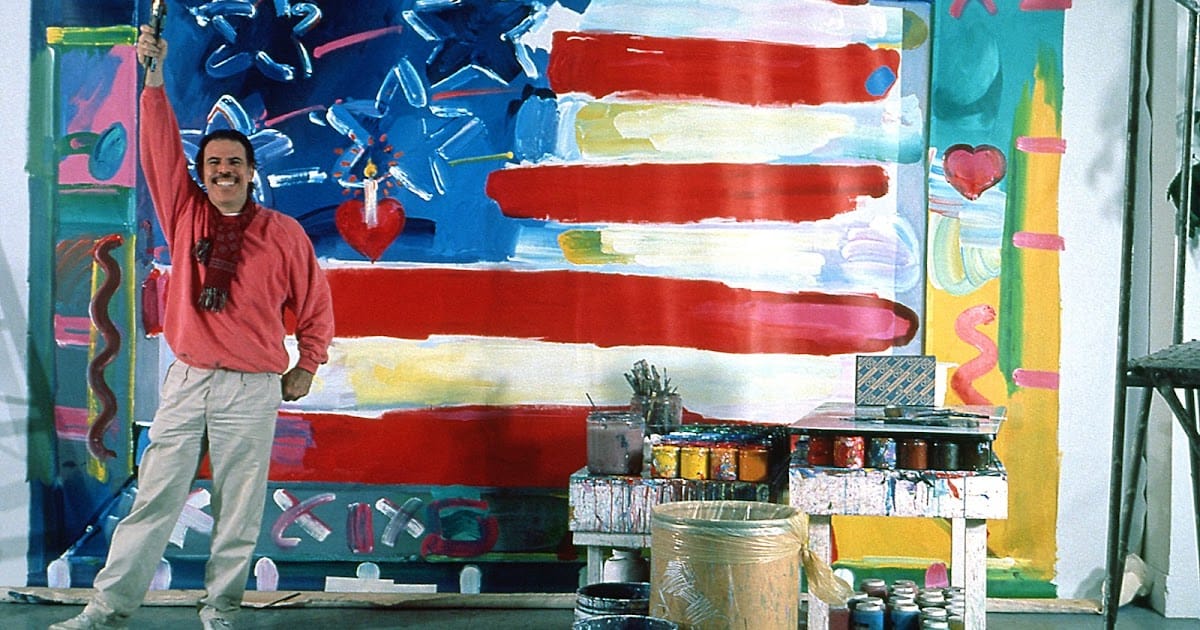
From the Associated Press.
Peter Max, whose colorful, psychedelic pop art expressed the optimism of the 1960s “flower power” movement and adorned everything from postage stamps to a cruise ship, has died at age 88, his son said in a written statement Wednesday.
Max died Monday, according to the statement. No cause was given, but he suffered from advanced dementia.
Max began his career in graphic design in the 1960s, and his swirling, colorful and instantly recognizable designs epitomized the “flower power” art of the era.
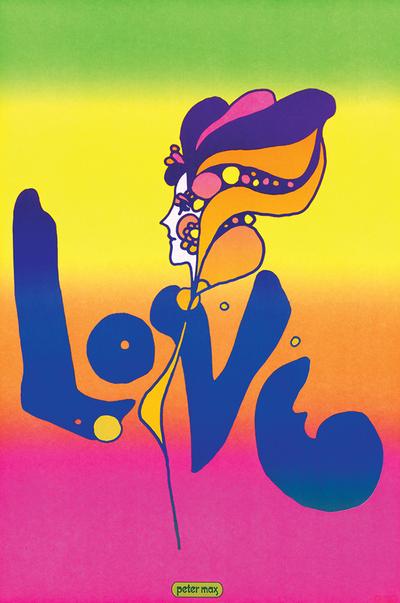
Max was the official artist for the Olympic Games, Super Bowl, Indianapolis 500, World Cup, World Series and many other events.
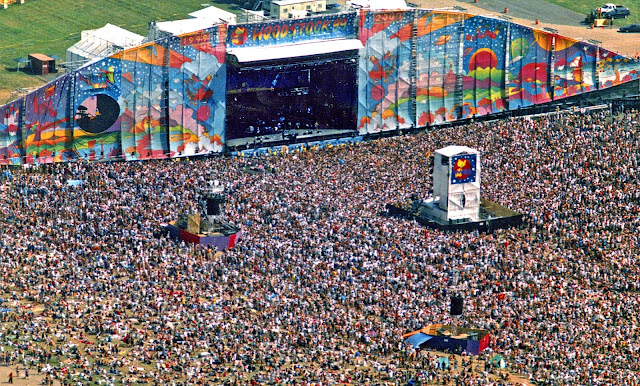
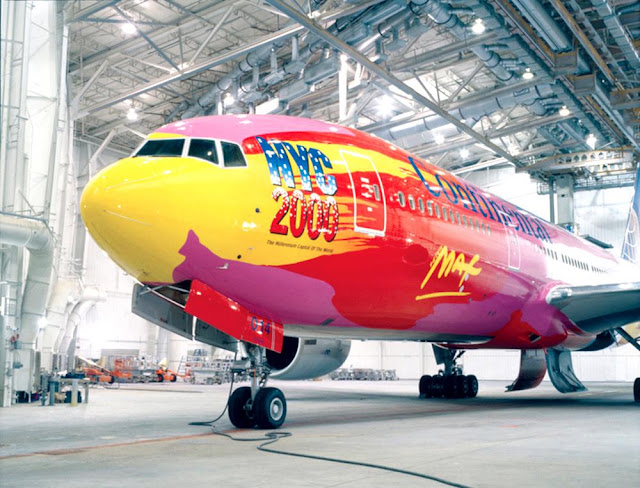
His art appeared on a Boeing 777 aircraft and a Norwegian Cruise Line ship.
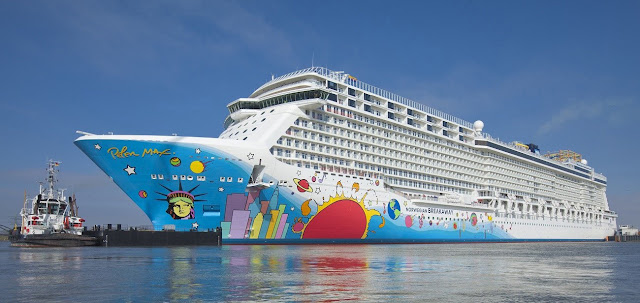
His portrait subjects ranged from US presidents to Taylor Swift.
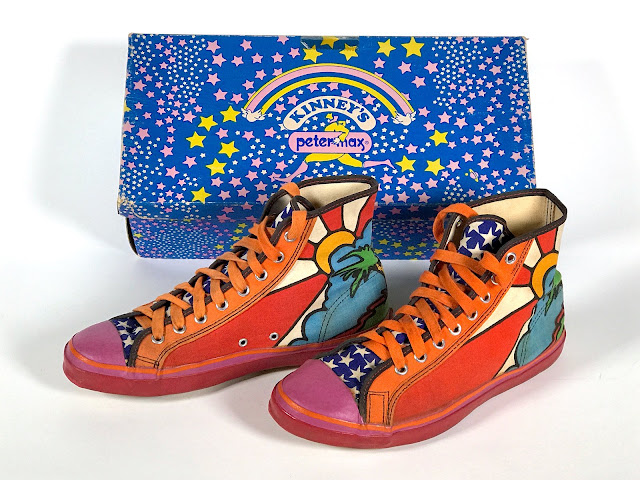
But in his first wave of success in the late 1960s and early 1970s, his wall paintings of flowers, the cosmos and cartoonish figures – all in bright colors like turquoise, orange and neon green – seemed to be everywhere.
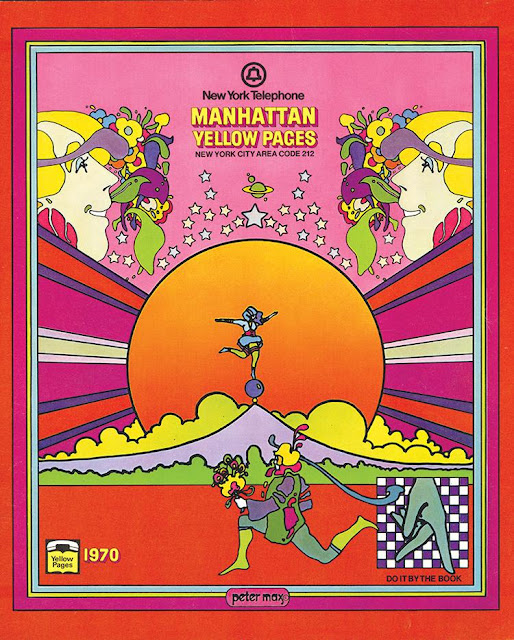
He even created covers for the Manhattan Yellow Pages, a business telephone directory distributed to millions of people.
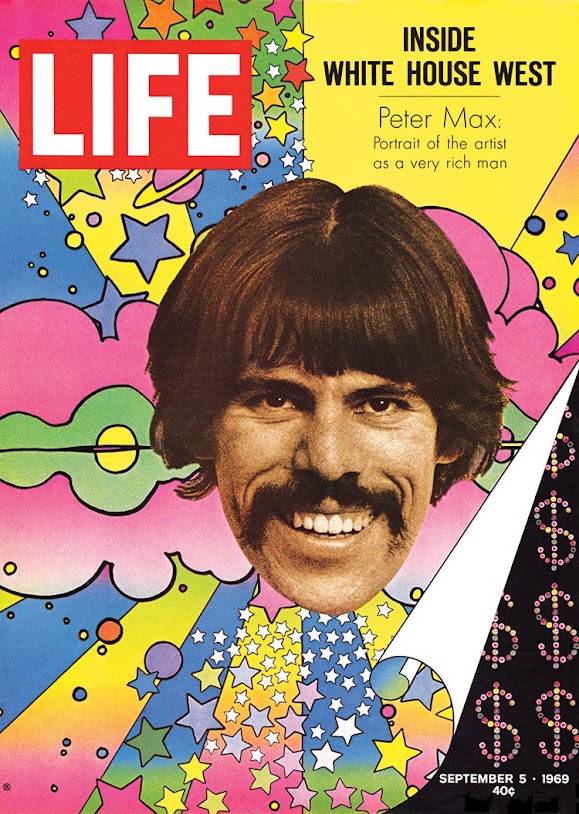
Max himself appeared on the cover of Life magazine in 1969, his characteristic dark, bushy mustache frames a cordial smile.
“We will remember his extraordinary creativity, his warmth, his curiosity and the way he saw beauty and possibility everywhere,” his son Adam Max said in the statement announcing his death.
“His art became part of American culture, but the man behind that art – the father we knew and loved – is the person we will miss the most.”
Max was born Peter Max Finkelstein in 1937 to a Jewish family in Berlin.
They fled Nazi Germany to Shanghai when he was a baby and then spent time in Tibet, Israel and Paris before settling in New York City when Max was 16.
Max studied in New York at the Art Students League, the School of Visual Arts, and the Pratt Institute.
In 1961 he opened a graphic design studio with friends.
His bold and unique style was an immediate hit with advertising agencies, publications, the corporate world and pop culture.
That led to a booming commercial business. “I would say my work was really almost exploited,” he said. “It was on cups, on sheets, on dresses, on silks, scarves and ties: 70 product lines.”
But what “bothered” him about all that success, he said, was that “he wasn’t painting anymore.” So he closed the business for a time in the early 1970s to reconnect with his art.
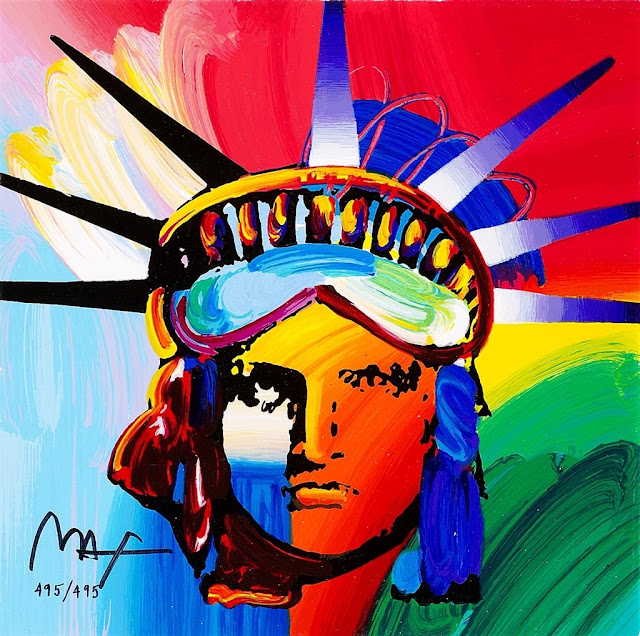
One of his biggest projects after returning to public life was a series of portraits of the Statue of Liberty, painted in the White House at the invitation of first lady Nancy Reagan in 1981.
Max weathered various controversies in his personal and professional life.
He pleaded guilty to tax fraud in 1997 after the IRS alleged he concealed more than $1 million in income from his art.
He was originally sentenced to two months in prison, but was eventually allowed to serve the sentence in a work release program, pay back taxes and a $30,000 fine, and perform 800 hours of community service teaching art in Harlem schools.
His art had a bright and happy vibe.
In an interview, he summarized his art like this: “I see everything through rainbow eyes.”
Although accounts of Max’s career sometimes lament that he was not taken seriously by the art establishment, his work has in fact appeared in dozens of museum exhibitions around the world. The Museum of Modern Art in New York owns seven of his works.
The art for the Beatles’ “Yellow Submarine” is sometimes mistakenly attributed to Max, but the album cover art and film “Yellow Submarine” are officially attributed to the deceased. Heinz Edelman.
Max claimed in a 2012 interview that he did the original design for the “Yellow Submarine” before handing it over to Edelmann.
But the website for New York’s Park West gallery, a former dealer of Max’s art, described Max’s involvement in “Yellow Submarine” as “an early consulting job.”
Beth J. Harpaz, a former Associated Press employee, was the lead author of this obituary. Associated Press writer Gene Johnson contributed to this report.