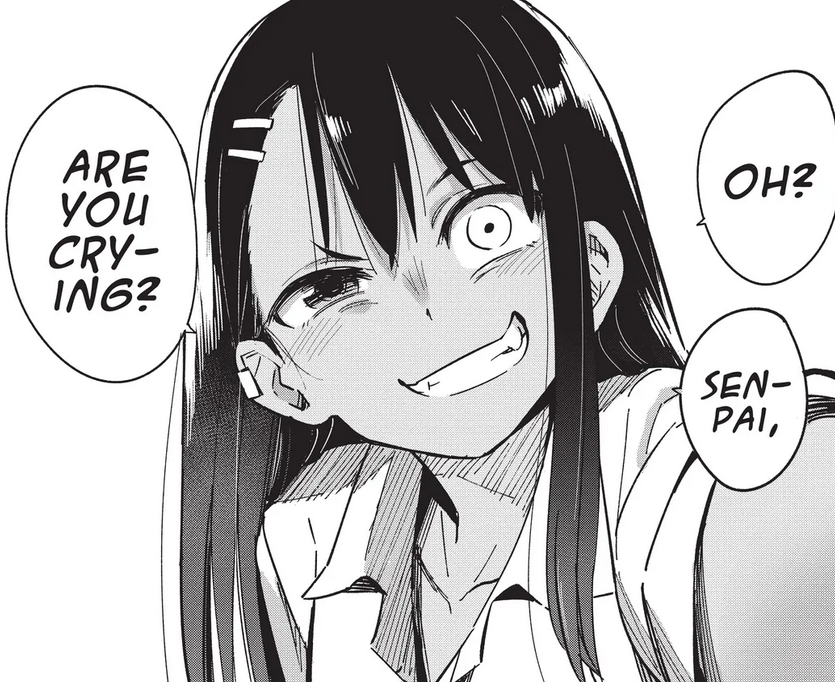
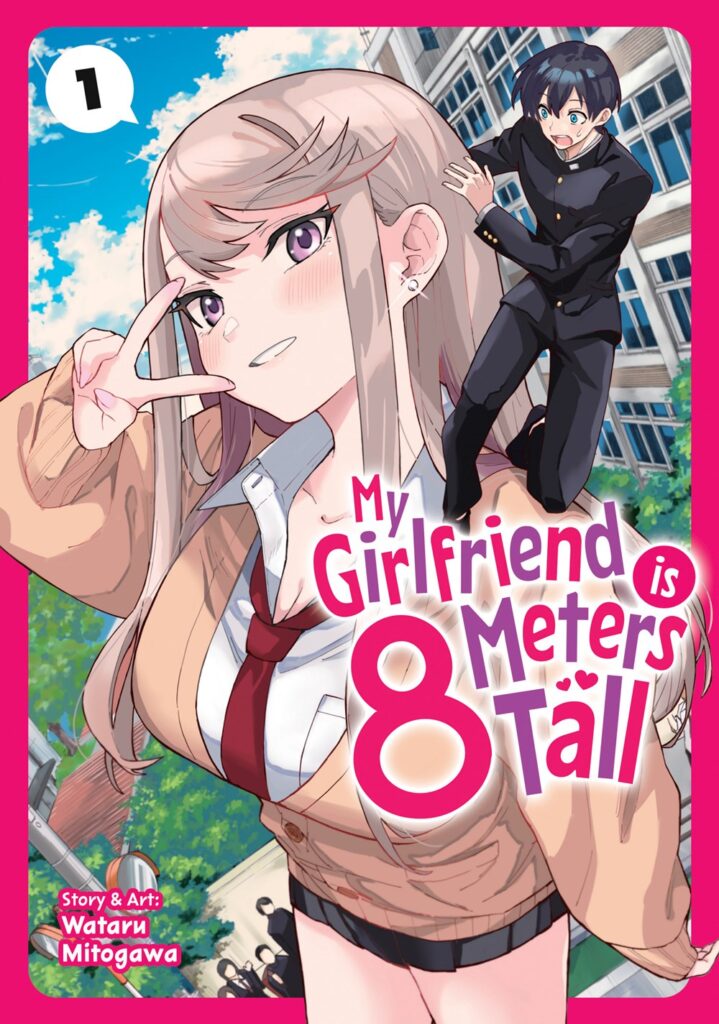
Over the past few years, a friend of mine and I have been discussing the rise of obvious fetish manga, where what is clearly and unequivocally an eromanga (erotic manga) premise is turned into a fluffy, widely acceptable mainstream manga, with all the H scenes removed. There is a lot to choose from: My girlfriend is 8 meters tall., musume monster, My wife has no emotions, Nagatoro-san, large size elf, My dear in disguise…Every time I mention this to someone, they can add another handful I haven’t heard of. I don’t think it is the most widespread trend, nor even the most notable, being significantly overshadowed by others that are larger and more popular. Of course, there’s the continued popularity of isekai and the rise of 2.5D theatrical productions, to name just two. But as a lifelong anime and manga otaku with Internet brain poisoning, the rise of whitewashed eromanga premises is a notable and persistent trend of the last maybe 10 to 15 years, specifically. And that’s interesting! Part of the joy of being an otaku, what keeps people coming back for a lifetime, is the diversity of stories and the resulting variety of different perspectives and visual styles. But I’m curious to know what brought us, as a culture, to this moment: what has allowed people to not only release their obviously fetish material, with few (if any) adjustments or glamorization, but also thrive doing so?

First, I’d like to acknowledge that there was never a period when people didn’t turn their weird sexual subject matter into art, whether they did it obviously and intentionally or didn’t even realize they were putting that into their works. Many classic works of all time contain things that you don’t really even need a particularly close reading to interpret as fetish material (not to mention his private correspondence. Hello, James Joyce). But more often than not, those instances are coded, incidental, or even unintentional. I don’t think anyone calls Gulliver’s Travels a work intentionally fetishizing size difference, despite it being one of the main plot points of the story. And as much as the 1973 animated adaptation of Robin Hood launched a sexual revolution with its anthropomorphic characters, the truth is that animals are easier to stylize than humans: even simpler than that, it’s just plain fun, giving your animated work an interesting aesthetic texture it wouldn’t otherwise have. Rank ½ is a manga famous for being many people’s first exposure to complicated gender feelings, a series where the main character can change gender effortlessly. But the living primordial goddess of manga that is Rumiko Takahashi seems almost baffled that anyone would read anything about this. When asked about Ranma’s gender change, she always replies that it’s not worth thinking about, apparently surprised that someone would project gender politics onto it and a little annoyed that they keep asking her. (I think there’s a bit of willful ignorance on Takahashi’s part: if you make up an intriguing scenario, you won’t be surprised when people are intrigued by it.) On the contrary, there is no ambiguity about what the author and audience are there for if you read The dangers in my heart.
The creators have always kept their most daring things hidden from the general public or published under a pseudonym. But in the digital age, that line between work you want to hide and work you were traditionally supposed to keep hidden has become increasingly flexible. People form niche communities around all kinds of things that a few decades before it was impossible to form a community around. We can all have frank discussions about our sexuality and our specific fetishes, and we are more equipped with the verbiage to do so. On top of that, there are two factors that specifically favor manga: Japan’s long history of self-published works and its encouragement of pseudonymity. It really feels like the walls have come down a lot, and that pseudonym allows people to express themselves more fully without the risk of being stopped in the supermarket and asked if you’re the armpit fetish manga artist. And it can make the eternal task of building an audience and perfecting your art online a little easier, in the same way that people can often take advantage of the popularity of drawing fan art for widely popular series to publish their own work.
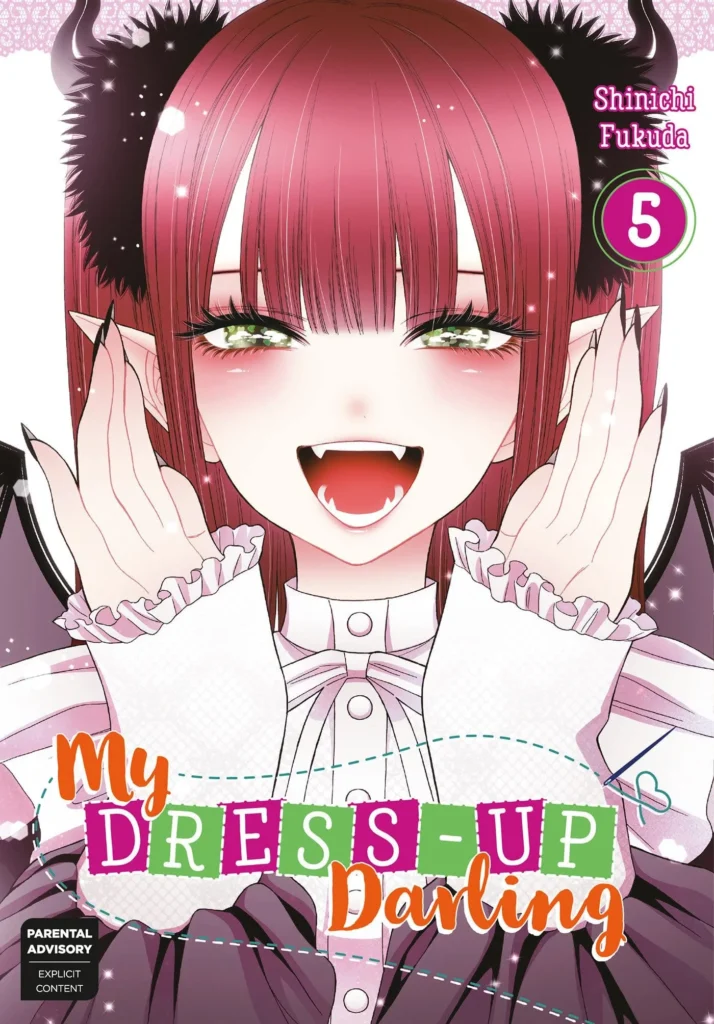
It can be argued that it is less revealing than that. After all, there was never a time when creating a work it was not all about washing your personal paraphilia and turning it into success, whether you have the knowledge and vocabulary to know you’re doing it or not. We have already discussed Robin Hood. A long-undeserved subculture, furries found common cause in bright, colorful worlds that transcended limited notions that human bodies are immutable and absolute. Many of the creators of these works were largely indifferent or openly hostile, and had made cartoons of animals simply because they believed that was what cartoons were supposed to be made about. Osamu Tezuka’s work is filled with strange fetish art (not to mention the sheer volume of erotic artwork found on his property after his death), something that belies his status as a benign, child-friendly adoptive father to Japanese baby boomers. As the old joke goes, “if you have a fetish, you have a genre fiction novel.”
But of course even with outliers like star wars either A song of ice and fire that even you Ted Lasso-Coworkers have heard that genre fiction is primarily a niche interest. Famously, the commercial and cultural dominance of the MCU has not created legions of comic book lovers or sci-fi fans, and the audience for the television adaptation of A song of ice and fire He won’t pick up Ursula Le Guin. On the contrary, My dear in disguise is published by pop culture giant Square Enix under its manga imprint Exactlyand My girlfriend is 8 meters tall. It is published in whore Shonen Jump — though exclusive to its Shonen Jump+ app, it shares that honor with bonafide hits like spy x family and chainsaw man (which also has no qualms about being a sexual manga for gross perverts). Those examples aren’t universal, but even places outside of Japan have seen massive growth in manga and anime fans in recent years, especially among young readers. I also think there’s an intentionality to the recent crop of R18 manga turned non-R18 manga, and that intentionally sets it apart from all the times someone made a work where humans are shrunken. People know what they’re doing and are happy to accept it, and they know their audience will too.
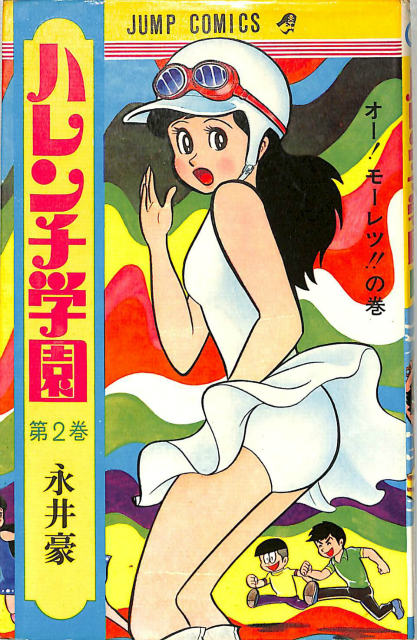
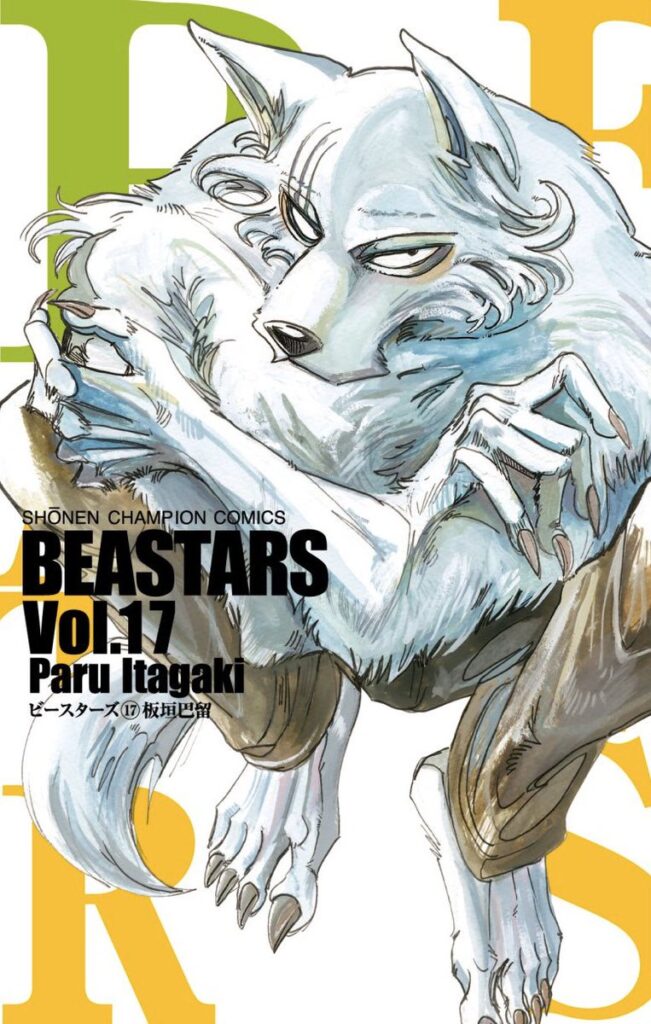
Because it’s been such a gradual change, it’s hard to pinpoint patient zero, an inflection point where everything changed in an instant. Of course the ecchi yesterday’s manga, titles like Harenchi GakuenThey have a way of appearing quaint and tame by modern standards. a work like ichigo 100% It blew me away as a teenager, in a way it simply won’t be able to in 2026. ghost in the shell He tied himself in knots to explain why only same-sex sex worked on his version of the Internet, but manga-ka Masamune Shirow was forced to sheepishly admit that he simply didn’t want to draw a naked man (if only it had stayed that way). While in today’s horny VRMMOs and isekai, being able to fuck in the digital world is a selling point. Perhaps the best example of the changing of time and tide in manga is the father-daughter manga-ka duo of Keisuke Itagaki, author of Baki the fighterand his daughter Paru Itagaki, most famous for beasts. While both the older and younger Itagaki are known for doing unhinged and crazy work, Paru’s are much more focused and refined, with the edge that comes from finding a community of like-minded people. And it’s no coincidence that Paru Itagaki is a digital native actively, clearly and unabashedly influenced by internet culture and the universal language of being horny online.
So, many factors have gradually brought us to the point where giantess or vomiting fetish manga is published in Shonen Jump. It builds on the timeless tradition of performers making pornography intentionally, and in all those many cases where they do it completely unintentionally. In our connected digital society, we have found a community in specialized interests and we have the existing body of knowledge to identify them and put them into words. Both creators and audiences, especially in Japan, are more familiar with and accepting of whitewashed fetish premises, and the already existing Japanese culture of pseudonyms and niche communities that have helped it grow. That’s the present, but I can’t guess the future. The “washed eromanga premise” may simply be an identifiable story style in the future, or it may recede and become something we can fondly remember as an example of this moment in time. Maybe with platforms becoming more and more unfairly hostile to sexual expression, their dominance will fade, or maybe that will just encourage people to take what was once a good old-fashioned porn premise and sand down the edges a bit. For now, it’s a fun trend and every example I see makes me happy about the limitless possibility of human expression.
I know there is a lot, a batchof examples that I have not named, such as Devil Chinchin wo Oe! either Super weak bladder Oshii-sanso feel free to mention me with your favorite examples.