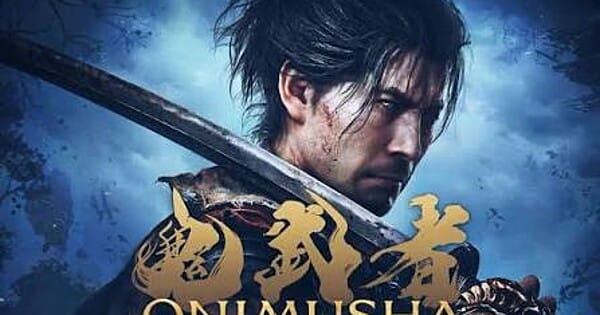
If there is a word that can be used to describe Way of the Swordwhich will be “cinematic.” The game throws you into gorgeously rendered, director-directed animated cutscenes at every opportunity. Part of me wonders if this would be better as a samurai action movie than the game itself, especially after listening to the heavy Japanese traditional soundtrack and visiting all the famous Japanese-style locations. The gap between the pre-rendered cutscenes and those in the game is noticeably different, and there are even a lot of moments where the facial animations look downright uncanny at times, especially when it comes to how the mouth moves or how the teeth appear. Still, it’s very impressive by Switch 2 standards. While the game’s framerate is locked to 30 FPS, everything feels as massive and intimidating as possible.
Action scenes and ghost designs in particular are very effective at eliciting strong basic emotional responses, whether disgust or fear. I love that all the bosses are designed in this twisted body horror style, like they’ve been ripped from a traditional Japanese painting, and while the way these bosses are handled may become the same (more on that later), they all leave a very strong lasting impression. The moments when you discover a new enemy or encounter a new threat are undoubtedly the highlights of the game. I was really impressed with testing my skills, utilizing different attack patterns, and figuring out new ways to counterattack.
©CAPCOM
The problem is that for a game that works so hard to create this seamless cinematic experience and tries to put you as the player right in the middle of the action, the story is… superficial. Musashi will encounter dozens of cutscenes and a variety of new characters to help him on his journey. However, when taking a step back and actually looking at the way the story progresses in this game, it’s really the equivalent of Musashi meeting a group of people telling him what to do. The game can be divided into various mini-stories in which Musashi fights different characters or different unique threats. Who these people are or their sudden importance to the story, it’s as if the game is relying on the fact that many of these characters may be referencing traditional Japanese historical figures. This can be fun as a way to introduce players to some Japanese history that can be looked up later, but it shouldn’t be used as a crutch to automatically instill a sense of importance in characters who don’t contribute much other than giving me their next quest.
Sometimes a new character is introduced. I do a bunch of fetch quests for them or complete a mission on their behalf, and then a specific threat ends up being tied directly to that character. Sometimes these missions are tragic, and other times they’re basic “you need to kill the enemies in this area to continue” mission. It’s easy to feel bad for the atrocities suffered by these characters or the people they care about because the game gets so graphic in this regard. But the emotional moments in this game are the equivalent of watching a bad guy kick a puppy. Yes, I felt something for a moment, but not enough to leave an impact, which is a shame because the cutscenes, voice acting, and directing all struggled to leave that impact.
It doesn’t help that the impact these horrific events have on Musashi’s character isn’t particularly interesting. He doesn’t really have a character arc throughout the game, other than perhaps taking some responsibility for the role he’s forced to play. The game’s closest theme is breaking down the true meaning of power. Is power helping others or using others as a means to an end? That’s…fine, but it’s a very basic story, so the presentation is wasted. The game also never really convinced me that Musashi went through significant changes for most of the game.

©CAPCOM
Speaking of not having any major changes, let’s talk about the gameplay, which brings out many of the best elements of action RPGs. As Musashi, you can attack with one-handed swords or two-handed swords, but you can’t win the game by pressing buttons. Both you and your enemies have health and stamina bars. The idea is to reduce your opponent’s stamina meter as much as possible so that you can drain their health faster with finishers. You can drain your stamina by using basic attacks, but you can also do it faster by using your secondary weapon or blocking attacks at the right moment. What I like about this game is that the methods you use to defeat smaller enemies also apply to bosses. The only difference is that bosses and different types of enemies have different levels of attack. Careful timing is required to parry or deflect attacks to create these openings. These moves are easy to master, but the trick is finding the right time to perform them. Even as you acquire items in the overworld or help villagers to eventually upgrade your abilities or gain strength, the game scales effectively so that you never feel like you’re being overpowered or stuck in a situation where you can’t reasonably win.
However, just as the game’s presentation is wasted on the story, these mechanics are wasted on the game’s structure. I mentioned that the story basically boils down to the characters being assigned tasks for Musashi in the overworld of Kyoto. Although there are different fast travel systems that allow you to traverse wider areas, that doesn’t stop the game from feeling repetitive. You go to an area to kill a bunch of enemies, complete an action set, and fight a new boss. Then you go to another area and kill a bunch of enemies, satisfy an action set, and maybe kill a new boss. This cycle repeats over and over again, to the point where hours of gameplay can be removed for a more compact experience. While the boss fights are always a highlight, I eventually reached a point where I stopped looking forward to the early parts of the new story sections because that’s where the game starts to feel a bit mindless. It doesn’t help that I’ve become so accustomed to this mechanic that taking down fodder enemies starts to feel more like a chore than an engaging combat experience, so it’s almost like I’m being punished for being good at the game.
There can be parts of the game that feel like a waste of the player’s time, given that the rewards for completing a lot of these tasks feel empty from a narrative and emotional perspective. It doesn’t help that the main villain and main antagonist of the story that’s introduced at the beginning is absent from nearly a dozen hours of gameplay, which is a shame because some of the villains in this game are very individual. But they were either defeated as soon as they appeared or didn’t push me as a player in most of my playthroughs. The game sets up a lot at the start, but it takes a long time for anything to pay off.

©CAPCOM
One of the worst things a game can do is make players feel exhausted or go through the motions to complete something. While the game didn’t get me to that point right out of the gate, it did by the halfway point. It’s a game that feels too long, and the rewards aren’t very satisfying. The gameplay mechanics are rich and testing against more engaging enemies such as boss battles is where the game really shines. I also have to praise how impressive this game is from a presentation standpoint. But it needs to give me a reason to care more. If the game streamlined its content and focused on the punctuating moments it really wanted to showcase in the movie, this could be the perfect action RPG for everyone. For now, it’s completely usable, but it could be better if it doesn’t outlast its popularity.